The architecture in context
What this comparison asks
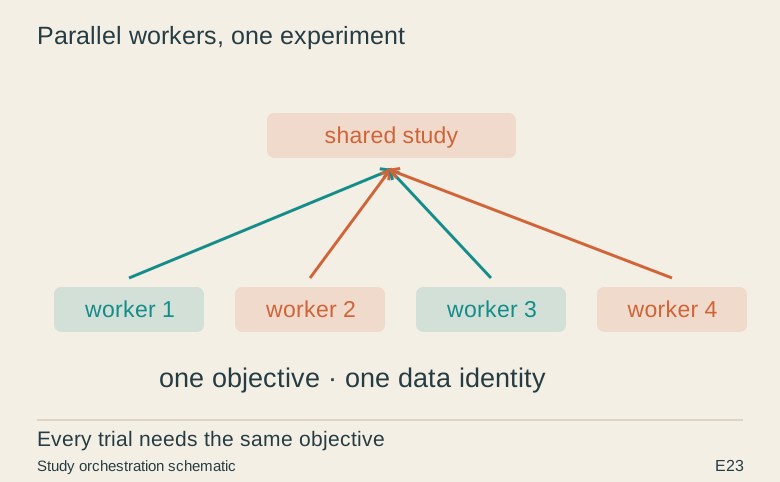
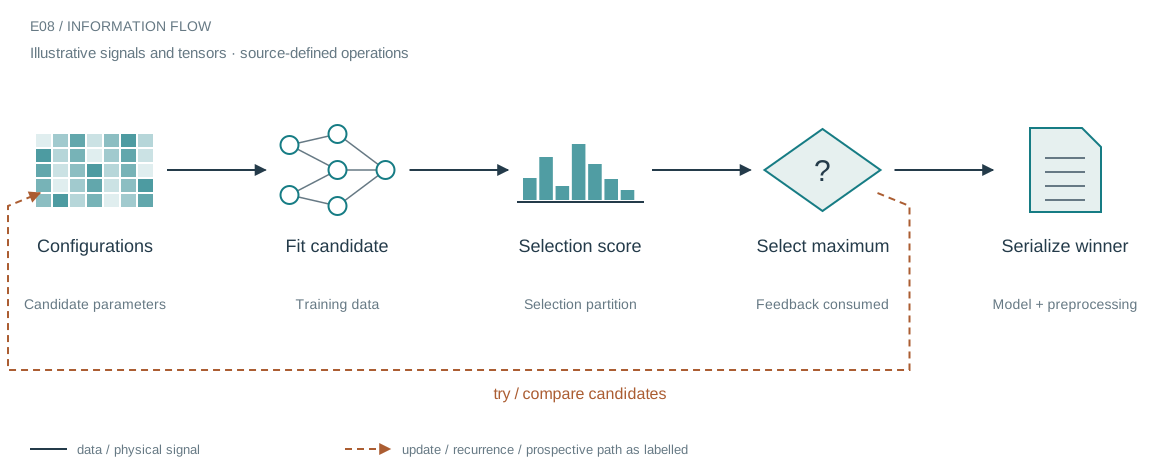
The archived utility evaluates configurations through a common predictor interface. Each candidate is fitted, produces predictions and returns an accuracy score; a small outer loop keeps the largest score. The design is convenient because different estimator families can share orchestration and serialization instead of duplicating experiment code.
Who does what in the stack
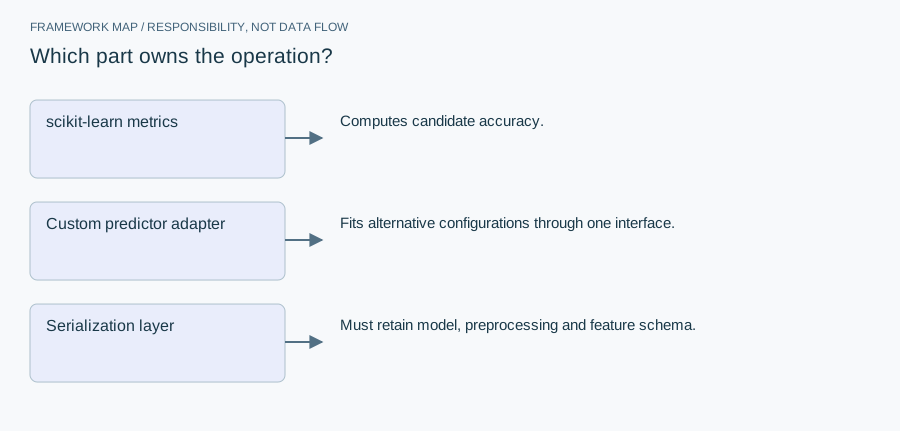
- scikit-learn metrics
- Computes candidate accuracy.
- Custom predictor adapter
- Fits alternative configurations through one interface.
- Serialization layer
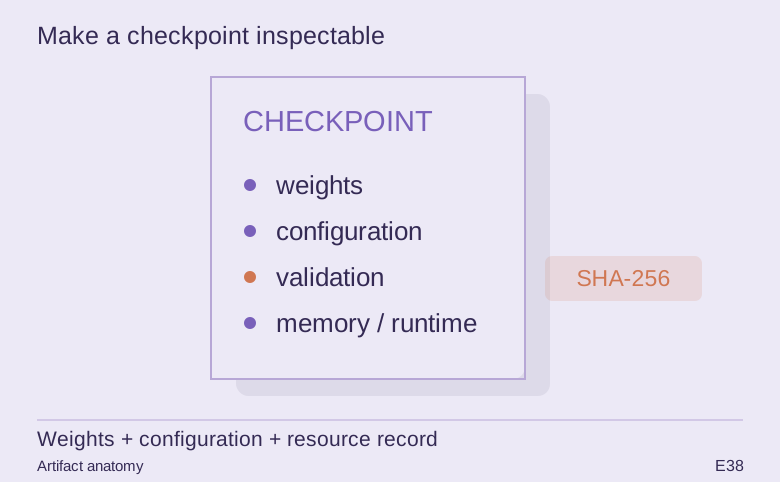
- Must retain model, preprocessing and feature schema.
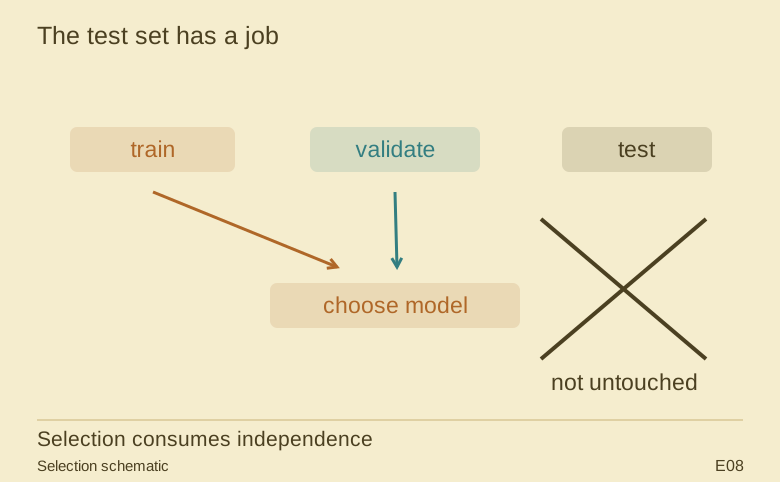
The project-specific part is the adapter between parameter dictionaries and the predictor’s internal methods, plus the saved-model path. This is useful engineering glue, but its naming should reflect how evidence is used. Once a split ranks configurations, that split is serving model selection.
Open up the implementation
Model selection is itself a fitted procedure
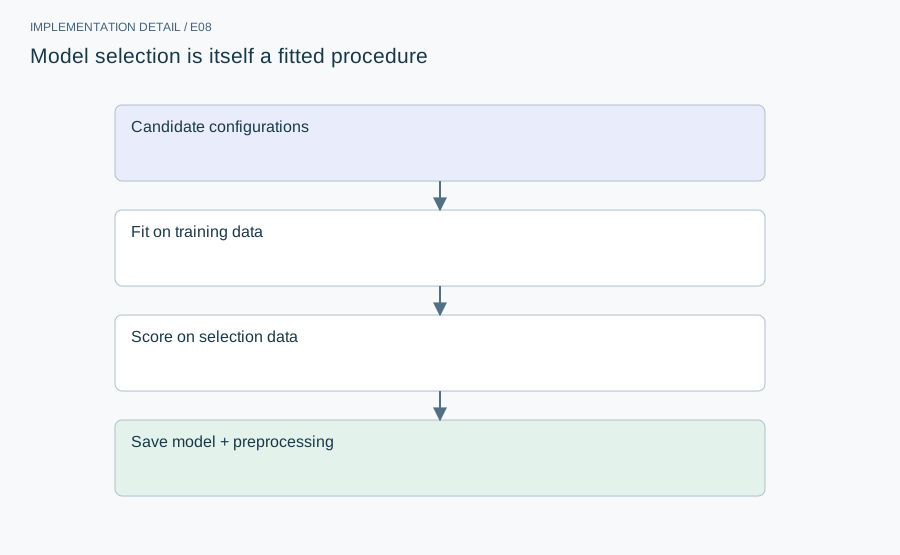
The source uses y_test while selecting the best candidate. Whatever the variable is named, those labels then serve as validation data. Serialization preserves the chosen object but does not restore independence. The saved artifact also needs the preprocessing state and feature schema used to produce its inputs.
The mathematical contract
Increasing the search space can overfit the selection partition without changing the final estimator’s apparent size. A small model chosen from thousands of tries is a larger statistical selection procedure than a single frozen model. An untouched final set evaluates that entire procedure.
Implementation and resource card
- Capacity / budget
- Compute scales with candidate fits, not merely final-model parameters. The selected file does not establish an untouched test score.
- Execution evidence
- This revision inspects and explains the archived implementation. It does not rerun the original workload. No unrecorded convergence time, throughput or accelerator result is supplied.
- Current reproduction context
- Current workstation, supplied by the author: Apple M4, 128 GB unified RAM, 40 GPU cores and 16 CPU cores. This is context for prospective reproduction, not attribution of every archived run. Python and framework versions are not fully locked for these historical sources; declarations, when available, are identified separately.
From explanation to a reproducible check
Trace every call that reads the selection labels. Save the selected hyperparameters, candidate count and split identifiers with the model. Reload it in a clean process and compare predictions on a fixed synthetic feature matrix before declaring the artifact portable.
Preserve input identities, configuration and failure records with the result. A successful numerical check only establishes the operation it exercises: it does not certify an entire dataset, model or deployed system. Reproduce the interface on a small deterministic input before optimizing throughput or increasing workload size.
A closer look at the implementation
The code that carries the idea
The excerpt computes accuracy against y_test inside evaluate_model_configuration, then calls that function repeatedly while updating best_score. The issue is not the formula for accuracy. It is the feedback path from the nominal test labels into the choice of configuration.
def evaluate_model_configuration(predictor, classifier_params):
    """
    Fit and evaluate the model based on the given classifier parameters.
    Returns the score and the parameters for comparison.
    """
    print(f"{datetime.now()}: {classifier_params.get('type')}: Evaluating configuration: {classifier_params['params']}...")

    predictor.ml_model._create_and_fit_model(classifier_params=classifier_params)
    predictor.ml_model._predict()
    score = accuracy_score(predictor.ml_model.y_test, predictor.ml_model.y_pred)

    print(f"DONE {classifier_params.get('type')}: {classifier_params['params']}, Score: {score}")

    return score, classifier_params


def optimize_classifier_group(predictor, classifier_type, configurations):
    print(f"Starting optimization for {classifier_type} with {len(configurations)} configurations...")

    # For other classifiers, proceed with the existing sequential process
    best_score, best_config = -1, None
    for config in configurations:
        current_score, _ = evaluate_model_configuration(predictor, {'type': classifier_type, 'params': config})
        if current_score > best_score:
            best_score = current_score
            best_config = config
Verbatim archive excerpt from fit_and_evaluate.py. Context-dependent historical code, not a standalone runnable program. Comments retain their original wording; the article distinguishes implemented behavior from stale or overbroad comments.
The boundary that matters
The selected maximum is an optimistic description of the search outcome, not an independent estimate of the chosen model. Re-labeling the same split after the fact does not restore independence. A fresh final partition must remain outside this loop.