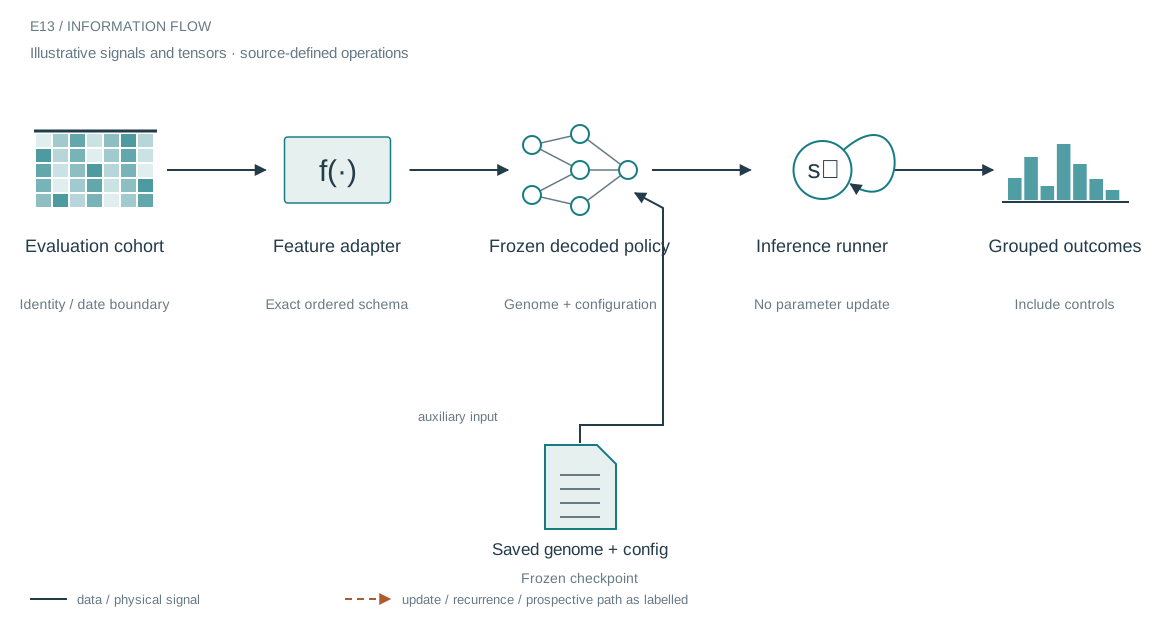
The architecture in context
What this comparison asks
The notebook loads a saved genome and routes a new feature table into the same inference interface used by the training project. Separating inference from evolution is a good architectural boundary: the evaluator should consume a frozen object rather than mutate the population while inspecting the new cohort.
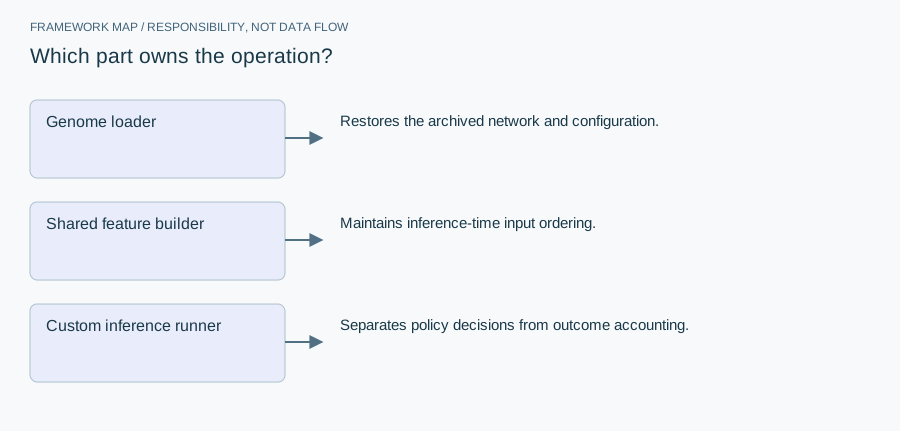
Who does what in the stack
- Genome loader
- Restores the archived network and configuration.
- Shared feature builder
- Maintains inference-time input ordering.
- Custom inference runner
- Separates policy decisions from outcome accounting.
The project-specific adapter accepts raw observations, unified features, aligned outcome information and a feature configuration. Those inputs have different roles. Outcome-derived quantities can be used to score a completed decision, but they must not enter the policy observation at decision time.
Open up the implementation
Reconstruct the policy before evaluating shift
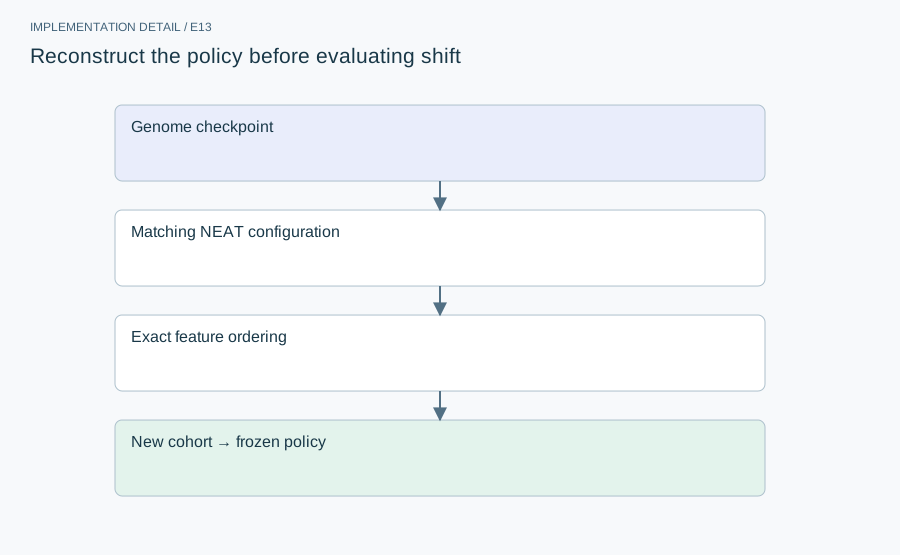
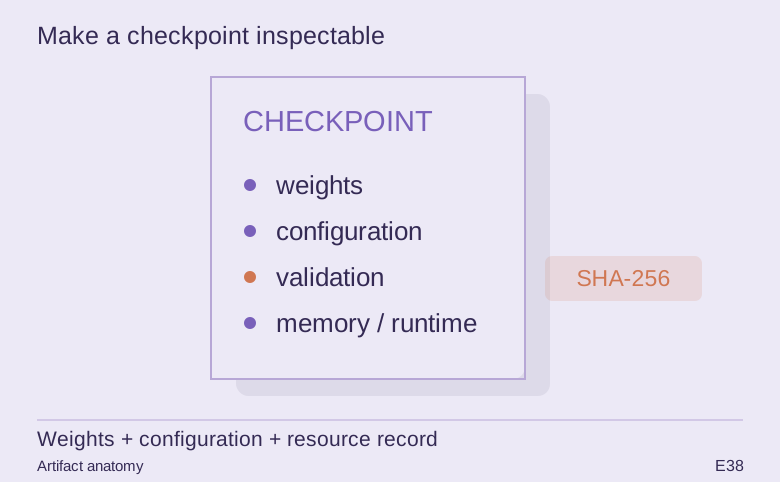
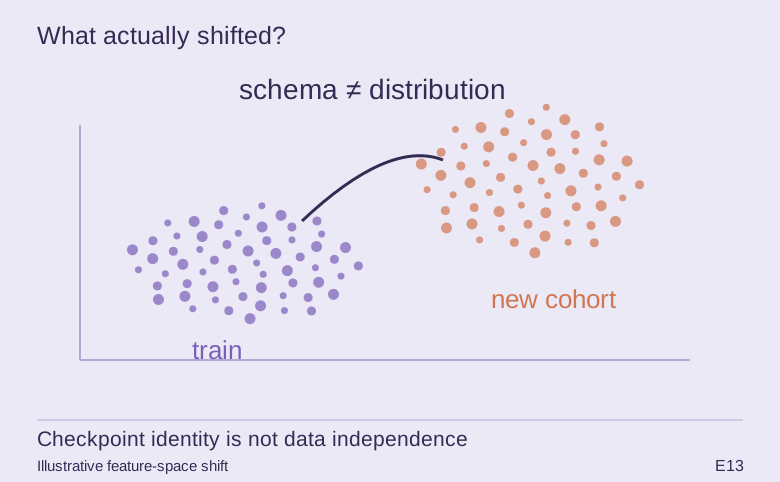
The deployed object is a triple: genome g, decoding configuration c and feature schema s. An OOD filename does not establish an independent population or a meaningful distribution shift. The evaluation needs cohort identity, timestamp coverage and prior exposure in addition to a successfully loaded network.
The mathematical contract
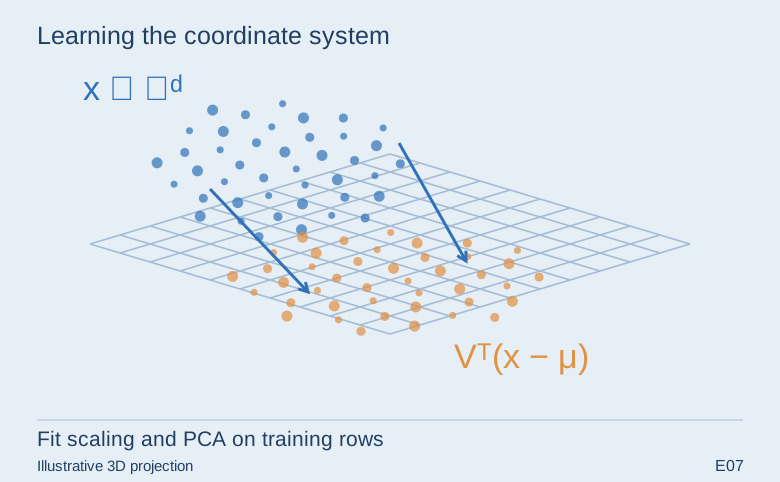
A changed feature normalizer or action mapping can masquerade as distribution shift. Freeze those components before asking whether the model transfers. Conversely, a deliberately adapted normalizer is a new adaptation protocol and should not be described as unchanged inference.
Implementation and resource card
- Capacity / budget
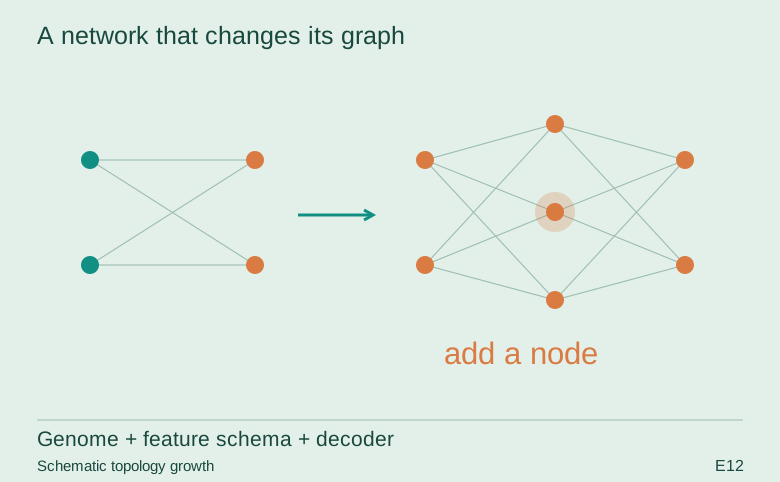
- Inherited variable topology; this evaluation file does not introduce a new trainable architecture.
- Execution evidence
- This revision inspects and explains the archived implementation. It does not rerun the original workload. No unrecorded convergence time, throughput or accelerator result is supplied.
- Current reproduction context
- Current workstation, supplied by the author: Apple M4, 128 GB unified RAM, 40 GPU cores and 16 CPU cores. This is context for prospective reproduction, not attribution of every archived run. Python and framework versions are not fully locked for these historical sources; declarations, when available, are identified separately.
From explanation to a reproducible check
Evaluate a saved deterministic input before and after reload. Then compare schema hashes and source cohort overlap. Record invalid inputs and abstentions alongside outputs so loading success is not confused with predictive success.
Preserve input identities, configuration and failure records with the result. A successful numerical check only establishes the operation it exercises: it does not certify an entire dataset, model or deployed system. Reproduce the interface on a small deterministic input before optimizing throughput or increasing workload size.
A closer look at the implementation
The code that carries the idea
The snippet makes the distinction inspectable by naming each argument to run_inference_with_trained_genome. It also shows that configuration accompanies the genome. The correct unit of deployment is that pair plus the feature schema—not an isolated pickled network.
genome, config = load_trained_genome(entry_genome)

# feature_config
features_ood, feature_helpers = get_feature_config_unified(df_unified_features, enable_all=True) # 10 inputs for 5sec features


# Run inference on OOD data
results = run_inference_with_trained_genome(
    genome=genome,
    config=config,
    df_l2_raw_filtered=df_l2_raw,
    df_unified_features_filtered=df_unified_features,
    potential_df_aligned_filtered=potential_df_aligned,
    feature_config=features_ood,  # Choose to use all or specific features
    potential_threshold=1.0,        # 1% minimum profit threshold
    earliest_trading_time="09:30",  # No trading before 7 AM
    max_entry_rate=None,           # Max 2% of bars can be entries
    stop_loss_pct=0.2,            # 0.05 = 5% stop loss
    take_profit_pct=0.03,          # 3% take profit
Verbatim archive excerpt from ood_test_neat_dual_algo_9.ipynb. Context-dependent historical code, not a standalone runnable program. Comments retain their original wording; the article distinguishes implemented behavior from stale or overbroad comments.
The boundary that matters
The filename “ood_test” does not certify a held-out date range, unseen instrument, unseen regime or absence of development exposure. This article treats it as an evaluation harness, not a verified OOD success. Untrusted pickle files must never be loaded merely to inspect a checkpoint.