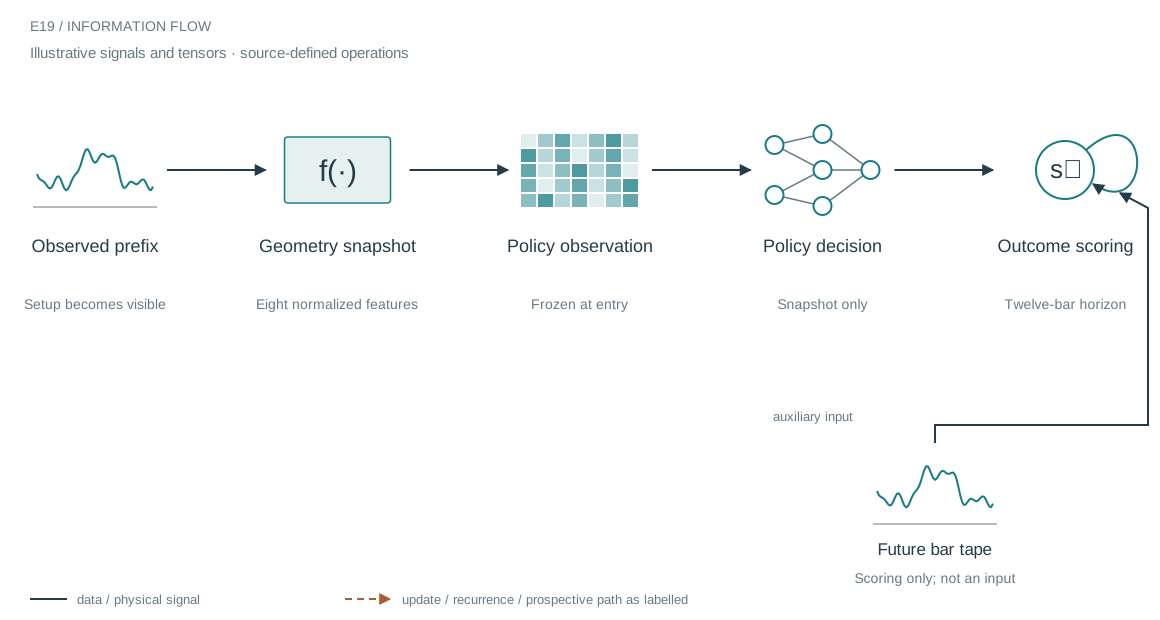
The architecture in context
The system we are building
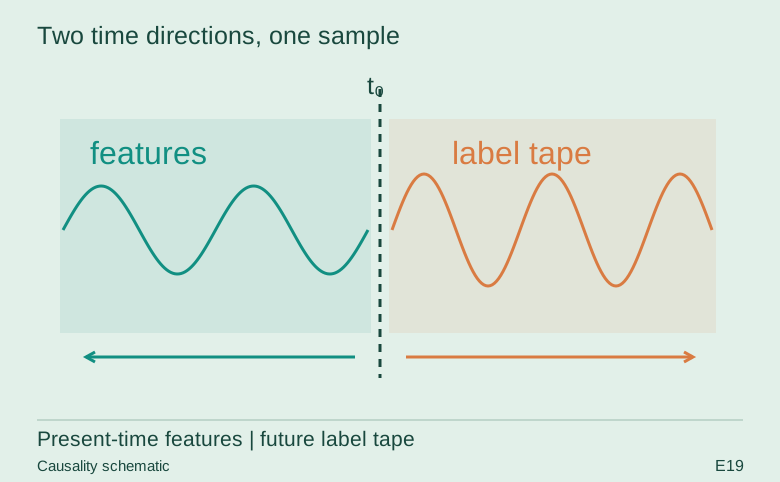
The preparation script extracts setup-centered episodes. A compact vector describes volatility, trend, geometry, direction and structural stop distances. A separate future segment supports simulation. This division is broadly useful in offline learning: observation construction and outcome construction may share a source table, but they must not share an information cutoff.
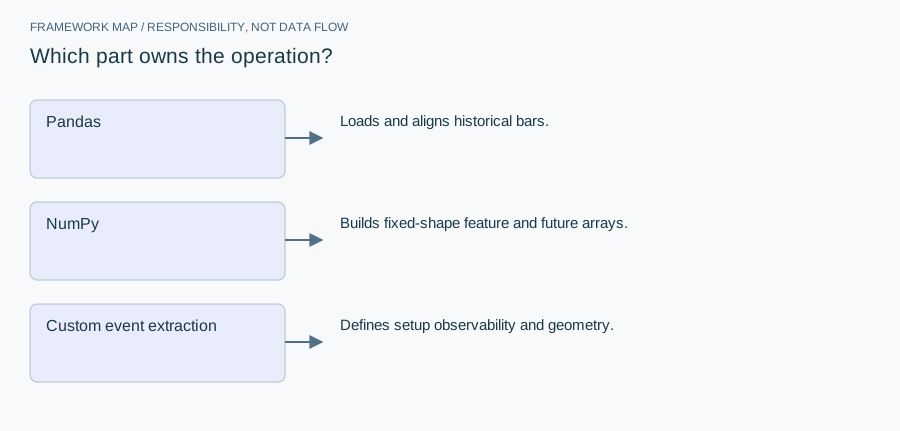
Who does what in the stack
- Pandas
- Loads and aligns historical bars.
- NumPy
- Builds fixed-shape feature and future arrays.
- Custom event extraction
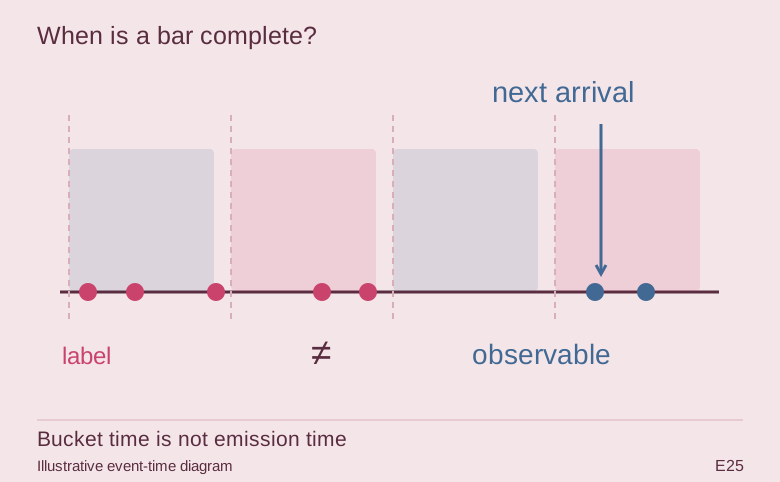
- Defines setup observability and geometry.
The project-specific work is the event detector and the eight-feature representation, including ATR-relative scales and bounded transforms. NumPy produces dense arrays suitable for a batched evaluator; Pandas handles file and time-series preparation. The active future-window constant is twelve bars in this file.
Open up the implementation
Keep a label tape out of the input tensor
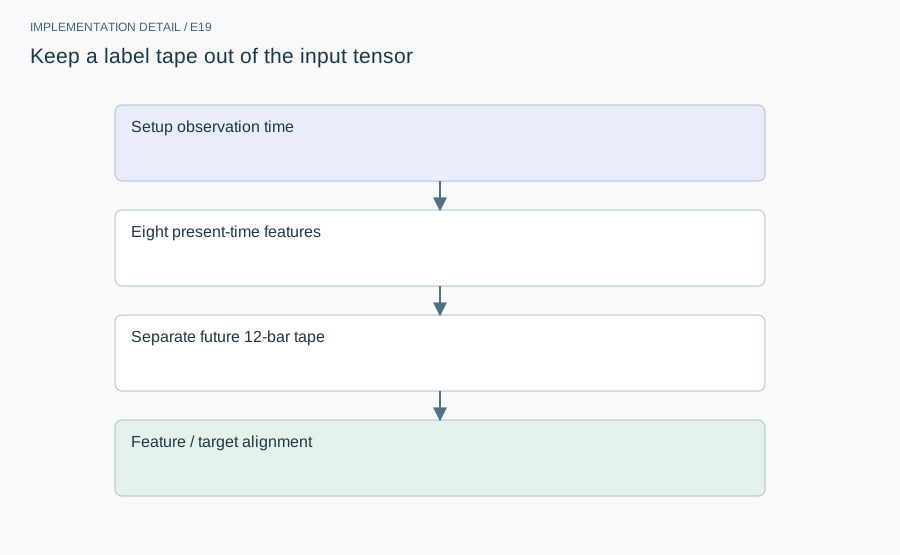
The preparation code combines geometry, context and subsequent bars into a stored sample. The resulting file can contain both causal input and future outcome data; file membership does not make every column a permitted feature. Column roles, cut-off times and row identity are the critical interfaces to the learner.
The mathematical contract
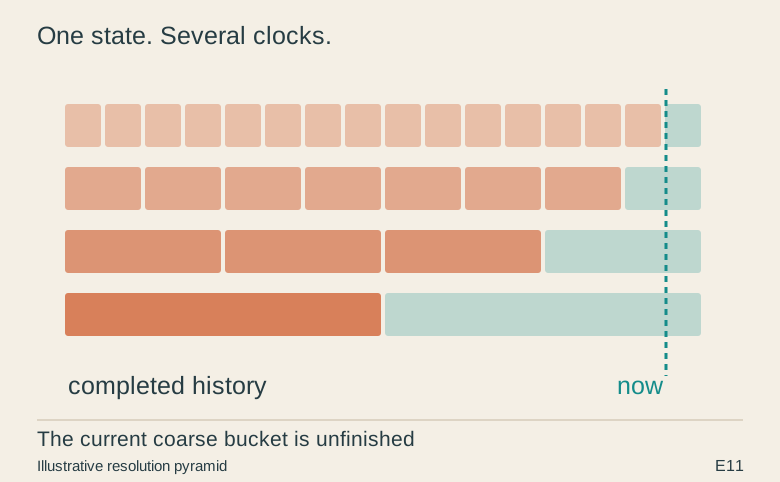
A longer target horizon changes overlap and label maturity. It also increases opportunities for leakage if upstream aggregations use complete future-containing buckets. The short policy’s eight-input interface should be enforced structurally rather than relying on a programmer to remember which columns to exclude.
Implementation and resource card
- Capacity / budget
- Eight feature columns; future tape is target/evaluation data, not policy input. No training occurs in preparation.
- Execution evidence
- This revision inspects and explains the archived implementation. It does not rerun the original workload. No unrecorded convergence time, throughput or accelerator result is supplied.
- Current reproduction context
- Current workstation, supplied by the author: Apple M4, 128 GB unified RAM, 40 GPU cores and 16 CPU cores. This is context for prospective reproduction, not attribution of every archived run. Python and framework versions are not fully locked for these historical sources; declarations, when available, are identified separately.
From explanation to a reproducible check
Randomize the future tape and assert that all eight inputs remain unchanged. Shift one row’s label tape and make the identity check fail. At chronological split boundaries, exclude labels whose maturity crosses into the next partition.
Preserve input identities, configuration and failure records with the result. A successful numerical check only establishes the operation it exercises: it does not certify an entire dataset, model or deployed system. Reproduce the interface on a small deterministic input before optimizing throughput or increasing workload size.
A closer look at the implementation
The code that carries the idea
The excerpt builds direction and structural-distance coordinates, then assembles the feature vector in a fixed order. A tanh transform bounds magnitude, but its denominator still needs a meaningful unit and a nonzero scale. Feature order is an API shared with the policy adapter.
        f_ratio = ratio

        # [4] Child Bar Size (relative to ATR)
        f_size = np.tanh((h[i] - l[i]) / curr_atr)

        # [5] Direction
        f_dir = direction

        # [6] Structural Stop Distance — Child (ATR-normalized)
        f_struct_child = np.tanh(child_sl_dist / curr_atr)

        # [7] Structural Stop Distance — Mother (ATR-normalized)
        f_struct_mother = np.tanh(mother_sl_dist / curr_atr)

        features = np.array([
            f_vol_regime,
            f_vol_opp,
            f_trend,
            f_ratio,
            f_size,
            f_dir,
            f_struct_child,
Verbatim archive excerpt from prep_data_pgpe.py. Context-dependent historical code, not a standalone runnable program. Comments retain their original wording; the article distinguishes implemented behavior from stale or overbroad comments.
The boundary that matters
Separating arrays is necessary, not sufficient, for causality. Every feature’s upstream rolling statistic and the setup’s observability time still need checking. A future tape is an evaluation object, never an extra policy input. The current article does not reopen the completed trading studies.