The architecture in context
The system we are building
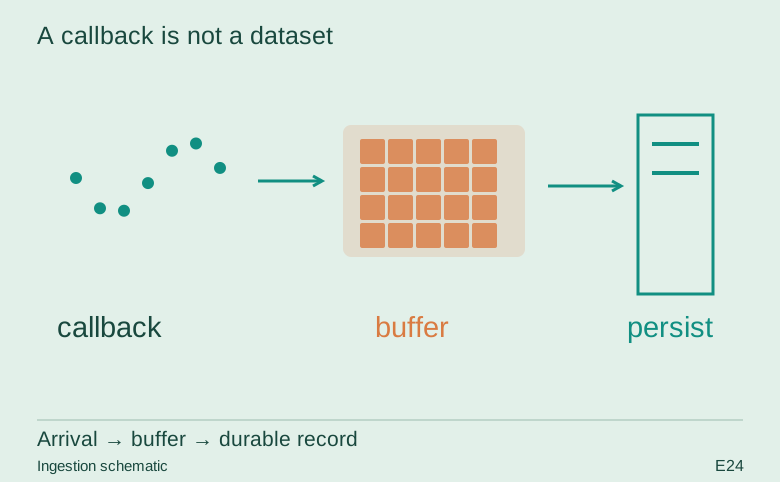
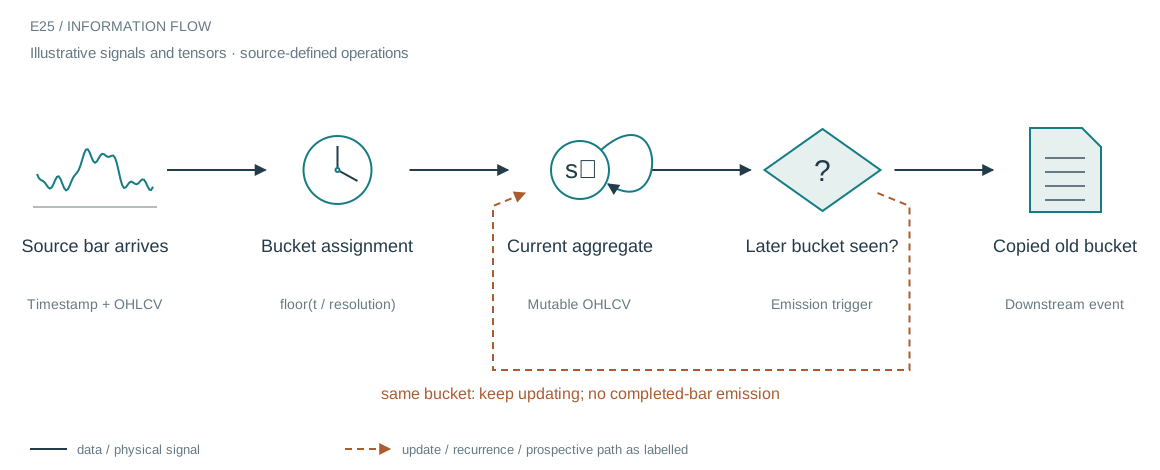
The aggregator maps source timestamps into fixed-width buckets. It holds one mutable aggregate, updates its extrema and volume, and returns a completed copy when a later bucket appears. This is a compact online state machine: the consumer receives an event only when the input stream provides evidence that the current bucket has ended.
Who does what in the stack
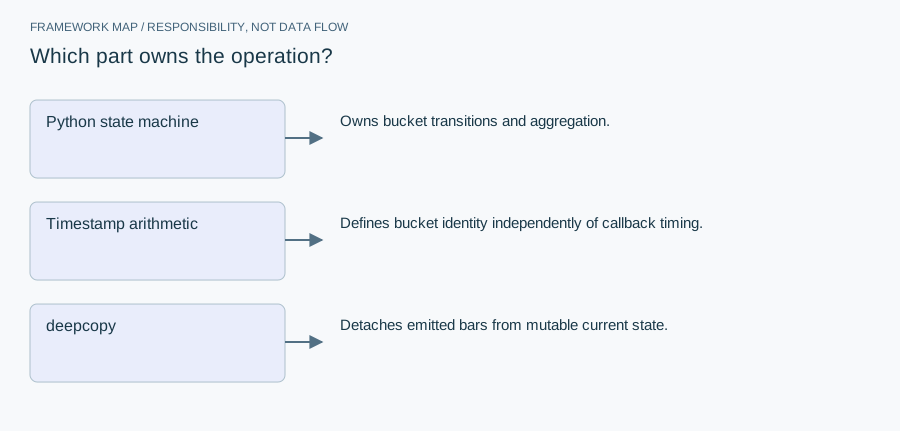
- Python state machine
- Owns bucket transitions and aggregation.
- Timestamp arithmetic
- Defines bucket identity independently of callback timing.
- deepcopy
- Detaches emitted bars from mutable current state.
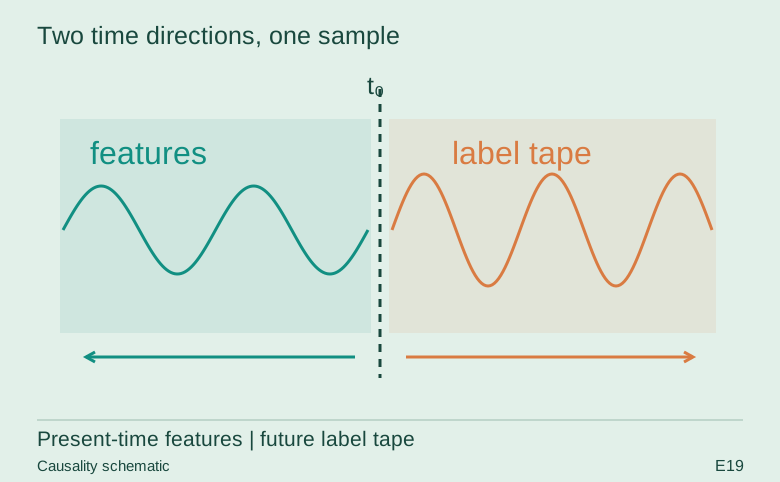
The custom implementation controls the precise emission boundary and preserves a copied completed bar before initializing the next one. It is not a neural layer, but its semantics determine which information every downstream model may use at a given instant.
Open up the implementation
A bar label is not its completion time
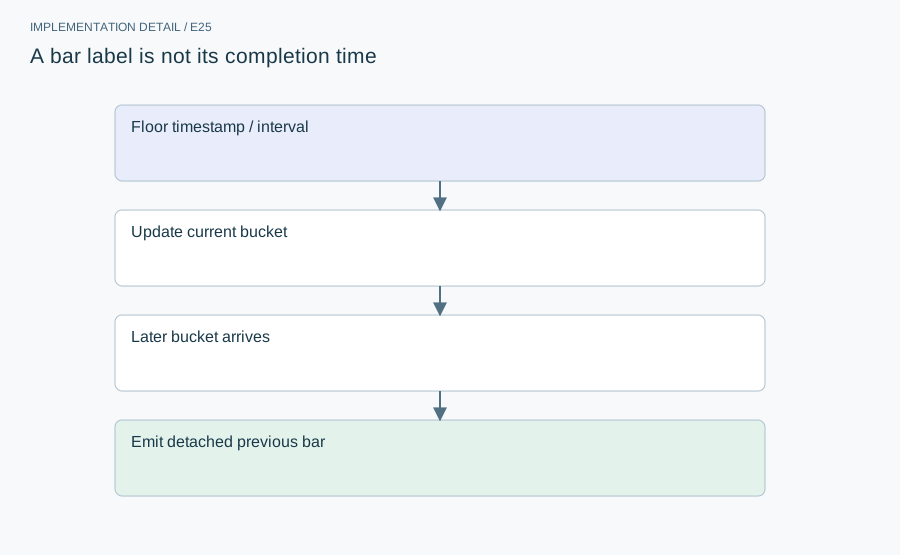
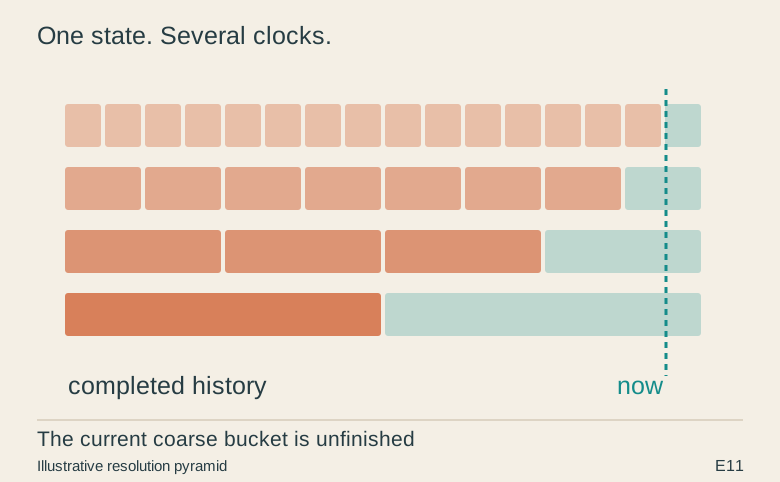
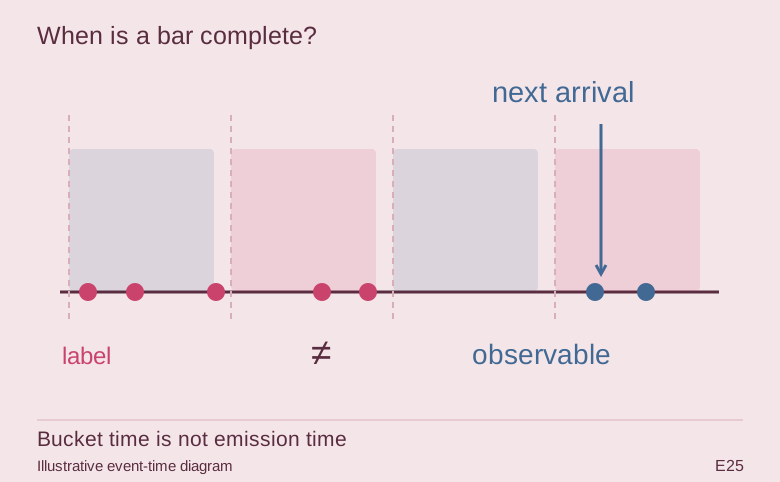
The state machine emits the previous aggregate when it observes a newer bucket. If no later event arrives, the last bucket remains un-emitted. A gap does not automatically create intermediate bars. A timestamp printed at the bucket start is therefore not the time at which all its values became available.
The mathematical contract
A watermark-based implementation could trade delay against tolerance for late arrivals, but that is a different completion policy. The source does not justify treating a late older event as part of the current bucket. Explicit shutdown behavior is needed for finite recordings.
Implementation and resource card
- Capacity / budget
- Constant-size current aggregate; no learned weights. Completion latency depends on later arrivals, not only interval length.
- Execution evidence
- This revision inspects and explains the archived implementation. It does not rerun the original workload. No unrecorded convergence time, throughput or accelerator result is supplied.
- Current reproduction context
- Current workstation, supplied by the author: Apple M4, 128 GB unified RAM, 40 GPU cores and 16 CPU cores. This is context for prospective reproduction, not attribution of every archived run. Python and framework versions are not fully locked for these historical sources; declarations, when available, are identified separately.
From explanation to a reproducible check
Test boundary-minus-one, exact boundary, a multi-bucket jump and end-of-stream. Keep chart label, last contributing event and emission timestamp in the test ledger.
Preserve input identities, configuration and failure records with the result. A successful numerical check only establishes the operation it exercises: it does not certify an entire dataset, model or deployed system. Reproduce the interface on a small deterministic input before optimizing throughput or increasing workload size.
A closer look at the implementation
The code that carries the idea
The excerpt’s strict greater-than comparison is the transition. If no new input arrives, no completion event is emitted. If the next input jumps several buckets, the implementation does not automatically create observations for the missing intervals. Deep-copying the completed aggregate prevents subsequent mutation from rewriting a previously emitted bar.
        # Bar 10:00:45 -> falls into 10:00:45 bucket.
        this_bar_bucket = (bar_ts // self.target_res) * self.target_res

        # 3. Initialization check (First run)
        if self.current_bar is None:
            self._init_new_bar(bar, this_bar_bucket)
            return None

        # 4. Check if we moved to a NEW bucket
        # If the incoming bar belongs to a later bucket than the one we are building...
        if this_bar_bucket > self.current_bucket_start:

            # A. Close the old bar
            completed_bar = deepcopy(self.current_bar)

            # B. Start the new bar (using the incoming data)
            self._init_new_bar(bar, this_bar_bucket)

            # C. Return completed bar
            # This triggers the Strategy Logic to run
            return completed_bar

        # 5. Same bucket -> Merge Data
Verbatim archive excerpt from aggregator.py. Context-dependent historical code, not a standalone runnable program. Comments retain their original wording; the article distinguishes implemented behavior from stale or overbroad comments.
The boundary that matters
A late bar with an earlier bucket needs an explicit policy; treating every non-new bucket as the current one can corrupt state. The final bucket also needs a declared shutdown or watermark rule rather than being assumed complete.