The architecture in context
The system we are building
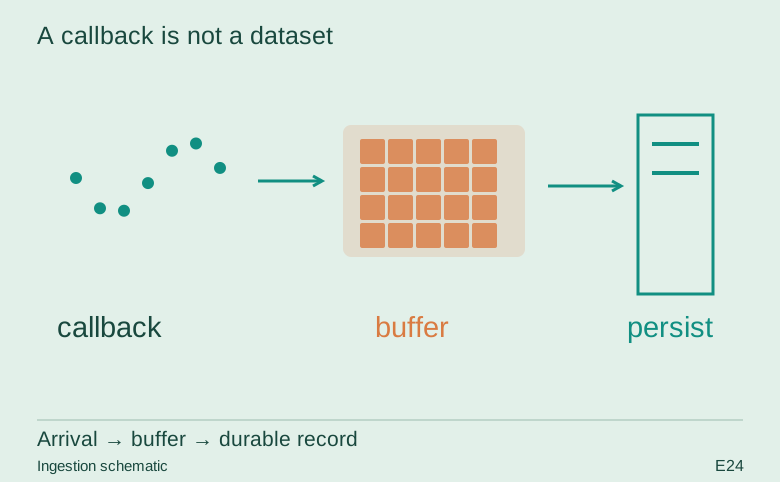
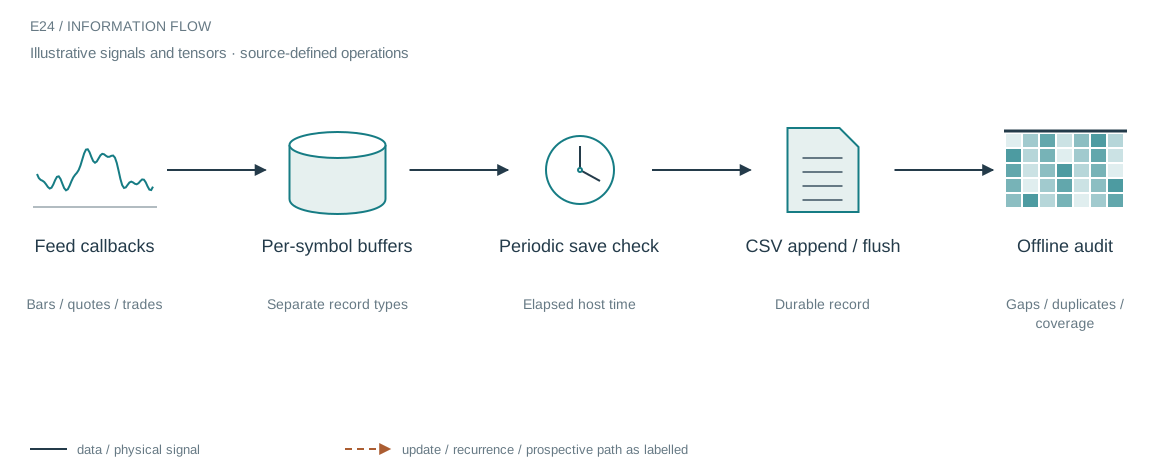
A recorder should keep its hot callback small and move storage work into a controlled path. This script collects several feed record types into per-symbol buffers and periodically writes them to corresponding CSV streams. A scheduler determines when the recorder is active. The same architecture applies to laboratory sensors and online ML telemetry.
Who does what in the stack
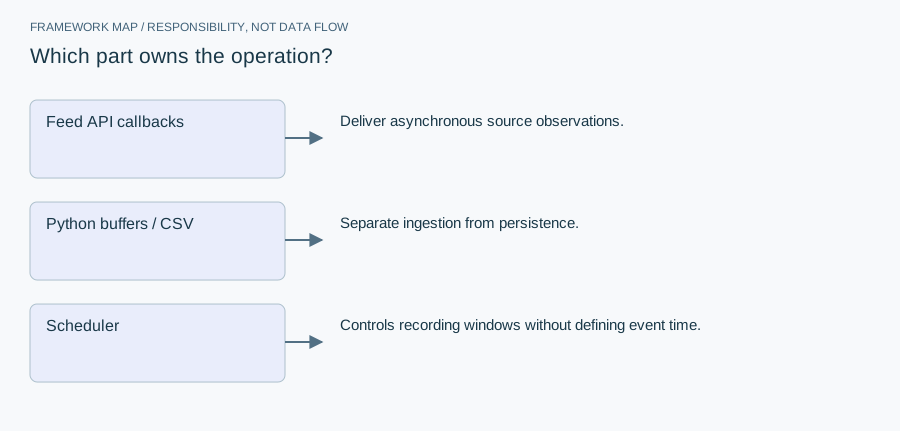
- Feed API callbacks
- Deliver asynchronous source observations.
- Python buffers / CSV
- Separate ingestion from persistence.
- Scheduler
- Controls recording windows without defining event time.
The project-specific work maps callback fields into structured rows, maintains per-symbol state and manages scheduled recording windows. The upstream broker API supplies events; it does not certify that the resulting files are complete, correctly ordered or suitable for a later learning target.
Open up the implementation
Design the ingestion clock before the model clock
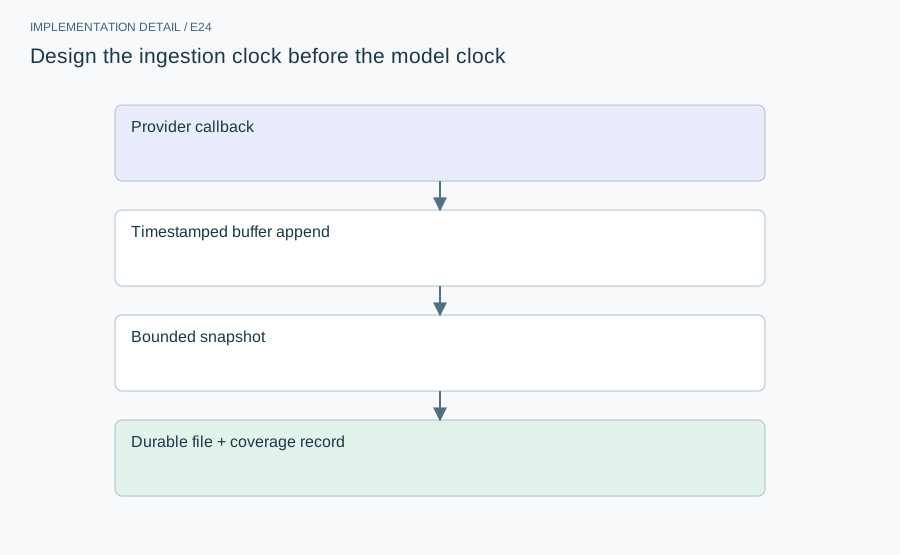
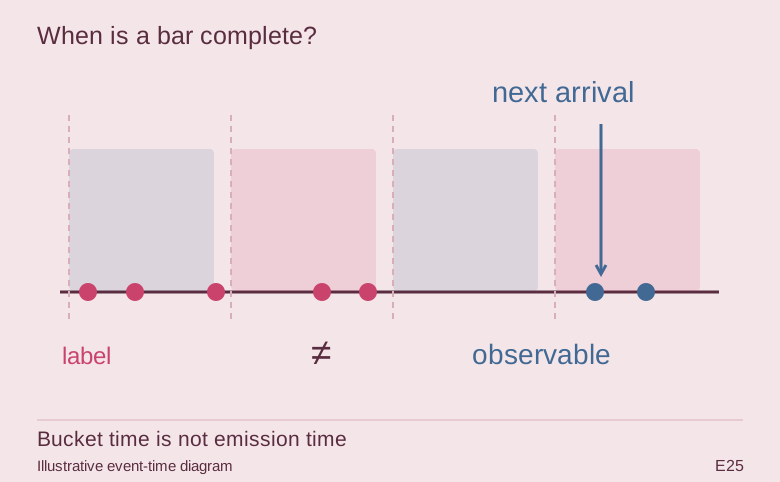
Event time identifies what happened in the market or sensor. Arrival time records when the system could know it. Flush time records persistence. Conflating those clocks makes both latency claims and causal feature reconstruction unreliable. A callback should minimize work before handing data to a controlled processing stage.
The mathematical contract
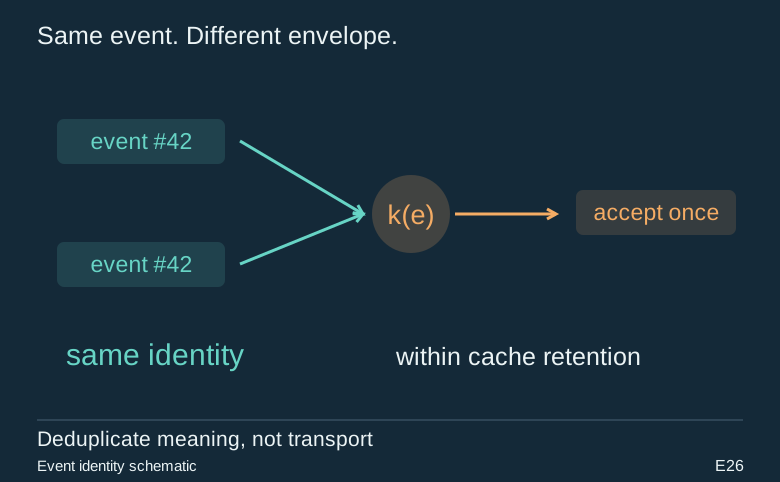
Larger buffers reduce write frequency but increase loss exposure on interruption. Smaller flushes can dominate I/O. Provider reconnects and duplicate events require explicit semantics; a continuously running scheduler is not proof of continuous observation.
Implementation and resource card
- Capacity / budget
- Ingestion component, not neural training. Capacity is buffer growth, flush interval and loss accounting.
- Execution evidence
- This revision inspects and explains the archived implementation. It does not rerun the original workload. No unrecorded convergence time, throughput or accelerator result is supplied.
- Current reproduction context
- Current workstation, supplied by the author: Apple M4, 128 GB unified RAM, 40 GPU cores and 16 CPU cores. This is context for prospective reproduction, not attribution of every archived run. Python and framework versions are not fully locked for these historical sources; declarations, when available, are identified separately.
From explanation to a reproducible check
Use a mock callback stream with a duplicate, a reconnect gap and a delayed event. Verify persisted order and coverage metadata. This article does not connect to a broker or initiate live capture.
Preserve input identities, configuration and failure records with the result. A successful numerical check only establishes the operation it exercises: it does not certify an entire dataset, model or deployed system. Reproduce the interface on a small deterministic input before optimizing throughput or increasing workload size.
A closer look at the implementation
The code that carries the idea
The excerpt writes every buffered row, flushes the file handle and clears the buffer. That ordering avoids clearing data before the write call, but a Python flush is not a complete crash-durability protocol. Failure during a partial write can also complicate replay or recovery.
    def check_and_save(self):
        current_time = time.time()
        if current_time - self.last_save_time >= self.save_interval:
            self.save_buffers_to_csv()
            self.last_save_time = current_time

    def save_buffers_to_csv(self):
        for ticker in self.tickers:
            # Save Real-time bars
            if self.realtime_bars_buffer[ticker]:
                for row in self.realtime_bars_buffer[ticker]:
                    self.csv_writers[ticker]['bars'].writerow(row)
                self.csv_files[ticker]['bars'].flush()
                self.realtime_bars_buffer[ticker].clear()

            # Save NBBO
            if self.nbbo_buffer[ticker]:
                for row in self.nbbo_buffer[ticker]:
                    self.csv_writers[ticker]['nbbo'].writerow(row)
                self.csv_files[ticker]['nbbo'].flush()
                self.nbbo_buffer[ticker].clear()
Verbatim archive excerpt from scheduled_futures_l1_stream.py. Context-dependent historical code, not a standalone runnable program. Comments retain their original wording; the article distinguishes implemented behavior from stale or overbroad comments.
The boundary that matters
Host receipt time, exchange event time and bar-completion time are different clocks. A file’s presence is not proof of uninterrupted coverage. No connections, subscriptions or recordings were started during this editorial work.