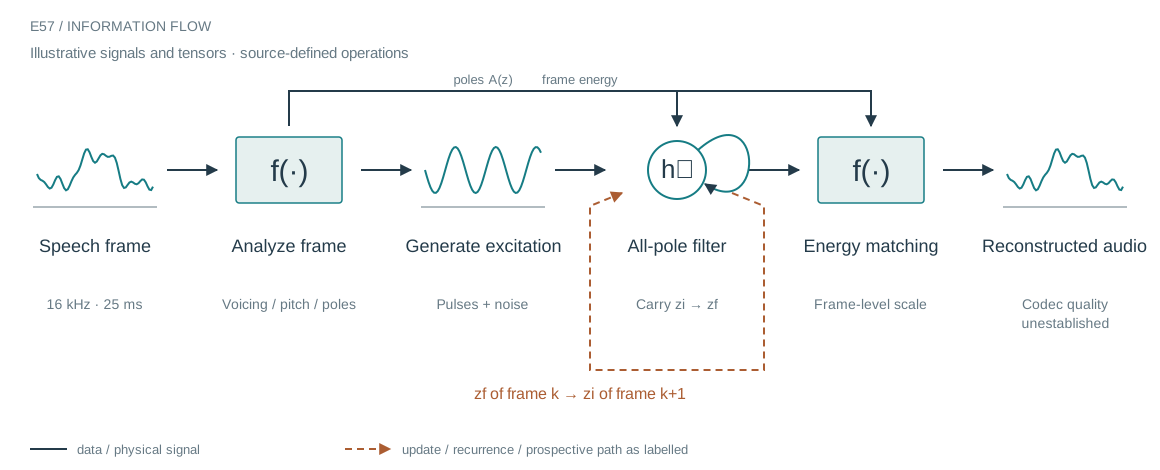
The architecture in context
The system we are building
The speech prototype analyzes short frames, estimates a stable filter and synthesizes speech-like output from voiced or unvoiced excitation. The system is model-based signal processing rather than a neural vocoder. It is still relevant ML engineering: a learned parameter predictor would have to respect the same state and waveform interfaces.
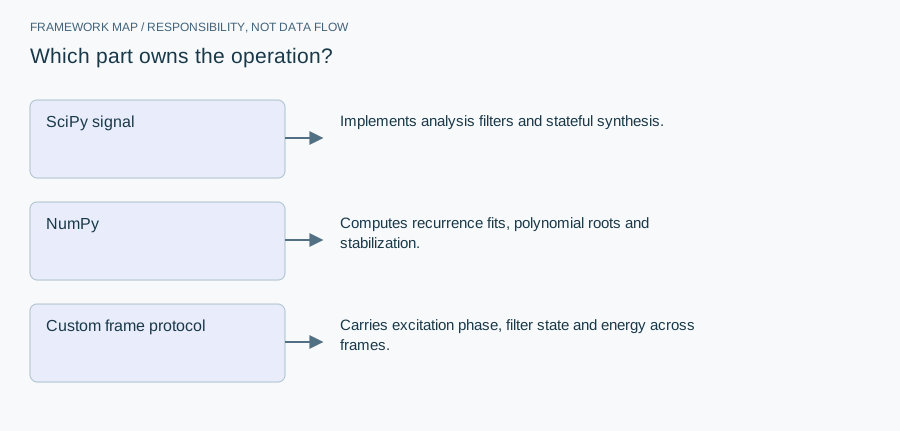
Who does what in the stack
- SciPy signal
- Implements analysis filters and stateful synthesis.
- NumPy
- Computes recurrence fits, polynomial roots and stabilization.
- Custom frame protocol
- Carries excitation phase, filter state and energy across frames.
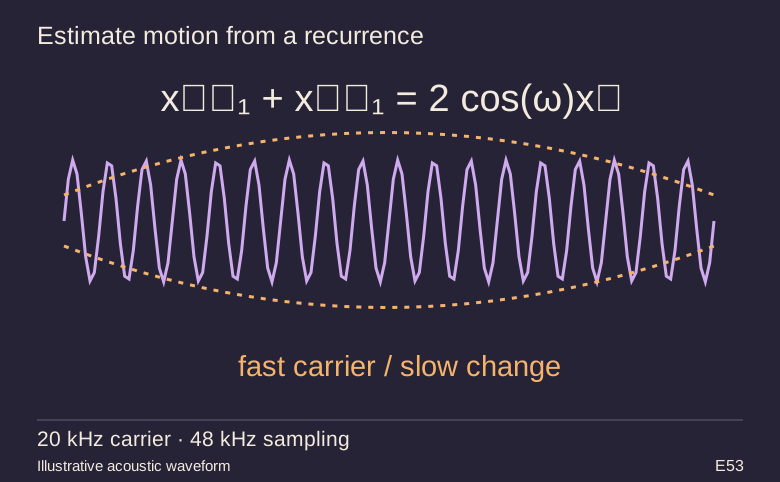
The custom analysis regularizes a recurrence fit, adjusts pole radii and selects excitation behavior. SciPy implements filtering; NumPy implements the frame-level algebra. The synthesizer carries both filter state and pulse phase between frames to reduce discontinuities.
Open up the implementation
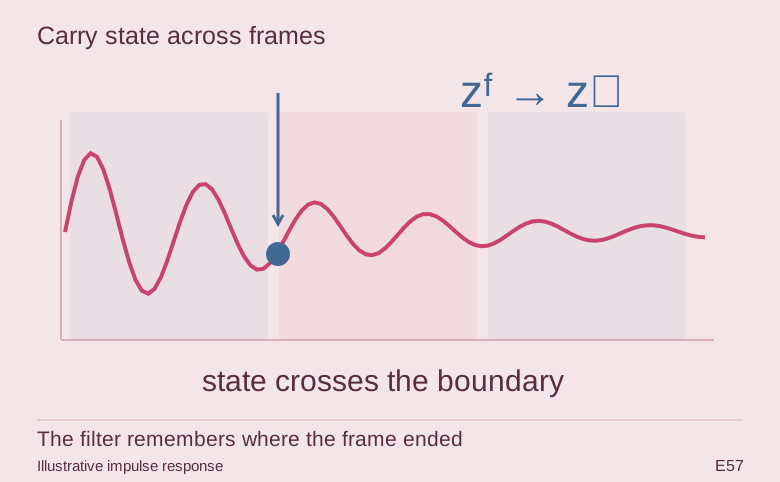
Carry synthesis state across frame boundaries
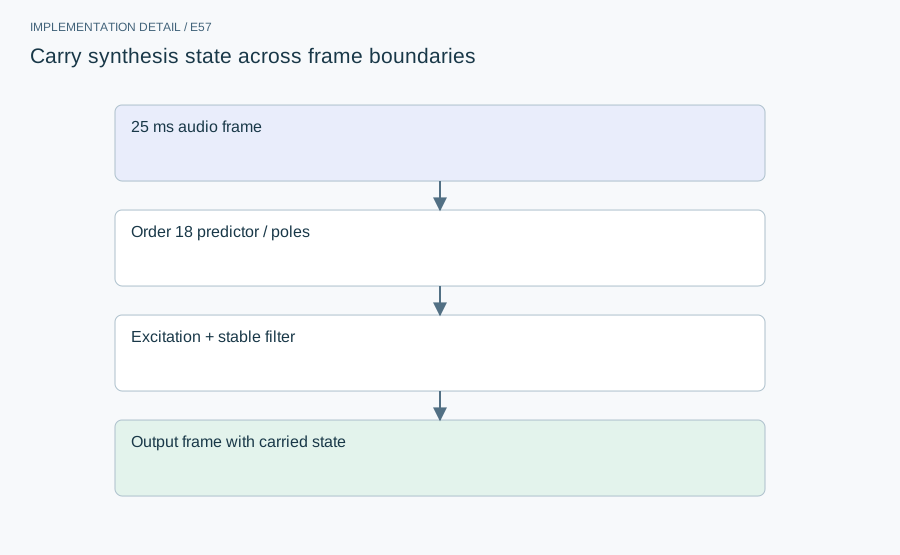
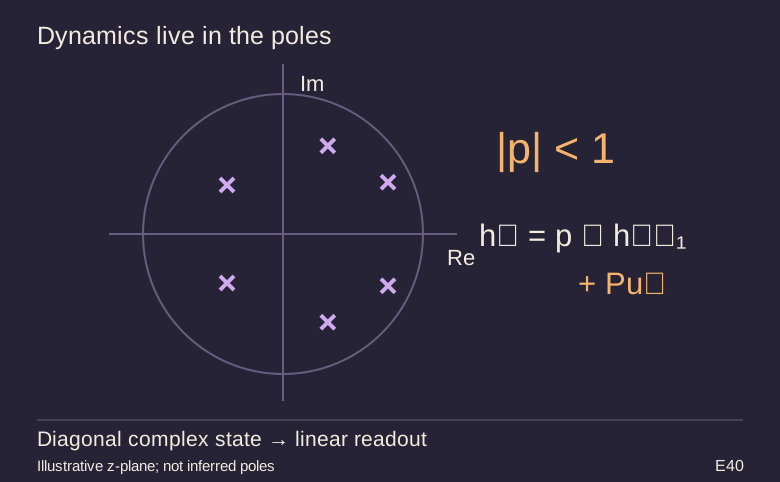
The vocal-tract approximation is an all-pole filter driven by voiced/noise excitation. Carrying lfilter’s final state into the next call avoids resetting the filter at every frame boundary. Pole stabilization and excitation phase continuity solve different problems; both can influence clicks and synthetic quality.
The mathematical contract
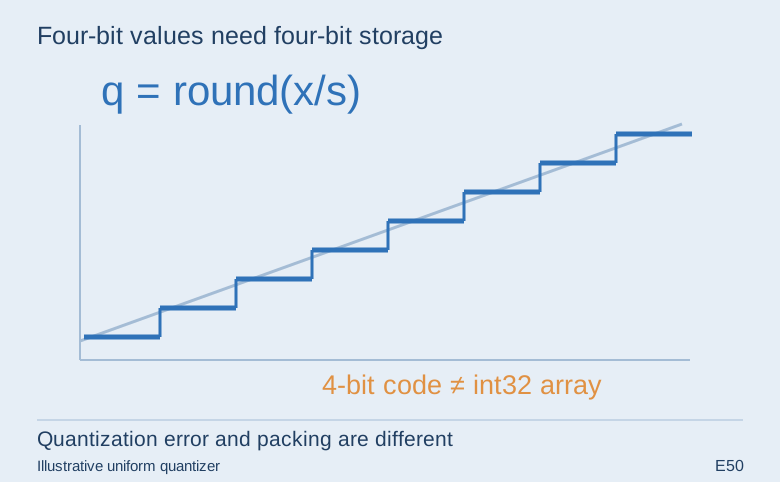
Clipping pole radii below .99 prevents unstable synthesis but alters the spectral envelope. Quantization, codebook metadata and excitation parameters would all belong in a real bitstream budget. A reconstruction plot does not establish a bitrate until that format is specified.
Implementation and resource card
- Capacity / budget
- 16 kHz audio;400 samples per 25 ms frame; order 18; codebook setting 64. No neural training budget; a complete serialized codec is not defined.
- Execution evidence
- This revision inspects and explains the archived implementation. It does not rerun the original workload. No unrecorded convergence time, throughput or accelerator result is supplied.
- Current reproduction context
- Current workstation, supplied by the author: Apple M4, 128 GB unified RAM, 40 GPU cores and 16 CPU cores. This is context for prospective reproduction, not attribution of every archived run. Python and framework versions are not fully locked for these historical sources; declarations, when available, are identified separately.
From explanation to a reproducible check
Split one synthetic excitation into frames and compare stateful filtering with a continuous call under fixed coefficients. Then deliberately reset state to expose discontinuities. Changing coefficients between frames needs its own state-transition and stability check.
Preserve input identities, configuration and failure records with the result. A successful numerical check only establishes the operation it exercises: it does not certify an entire dataset, model or deployed system. Reproduce the interface on a small deterministic input before optimizing throughput or increasing workload size.
A closer look at the implementation
The code that carries the idea
The excerpt supplies zi to lfilter and returns zf for the next frame. Resetting that state every 25 ms would repeatedly erase the filter’s memory. Output energy is then matched to the source frame, with a separate unvoiced adjustment; that scaling also changes how continuity should be evaluated.
    if len(zi) != len(poles) - 1:
        zi = np.zeros(len(poles) - 1)

    synth, zf = signal.lfilter([1.0], poles, source, zi=zi)

    synth_energy = np.mean(synth**2) + 1e-9
    scaling_factor = np.sqrt(energy / synth_energy)
    if not is_voiced:
        scaling_factor *= 0.5

    synth = synth * scaling_factor
    return synth, zf, phase_offset
Verbatim archive excerpt from auto_benchmark.py. Context-dependent historical code, not a standalone runnable program. Comments retain their original wording; the article distinguishes implemented behavior from stale or overbroad comments.
The boundary that matters
The file is an analysis/synthesis benchmark, not a complete compressed bitstream specification. Pole coefficients, pitch, voicing, energy, codebooks and framing all consume bits. A reconstructed WAV and a favorable spectral metric do not establish a deployed bitrate or perceptual quality.