The architecture in context
The system we are building
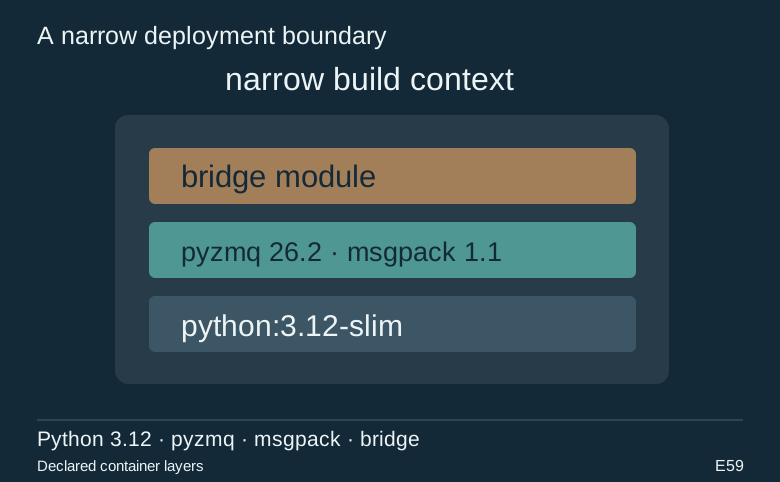
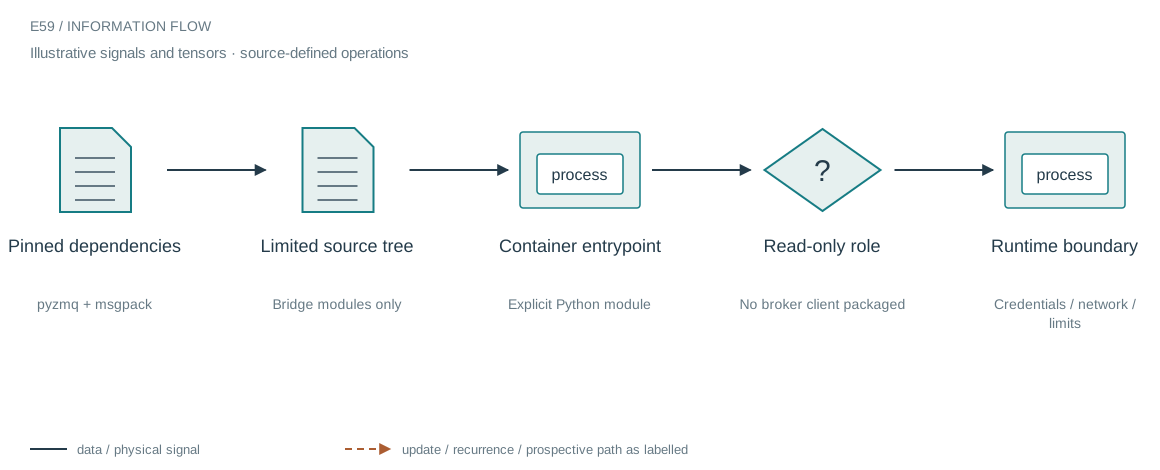
The Containerfile builds a narrow transport image rather than copying the entire application repository. It starts from a slim Python base, installs two explicitly versioned packages and copies only the bridge subtree. The intended read-only role is supported by excluding unrelated broker-client and execution code from the image.
Who does what in the stack
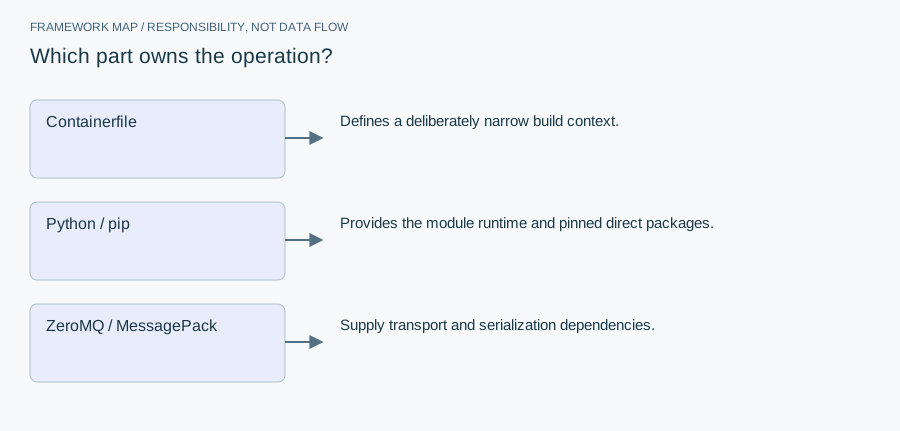
- Containerfile
- Defines a deliberately narrow build context.
- Python / pip
- Provides the module runtime and pinned direct packages.
- ZeroMQ / MessagePack
- Supply transport and serialization dependencies.
The project-specific contribution is the packaging boundary and module-entry convention. This is not a custom container runtime. A small image is easier to inspect and can help prevent accidental coupling between an observer and an action-capable service.
Open up the implementation
Freeze the application boundary, not just pip names
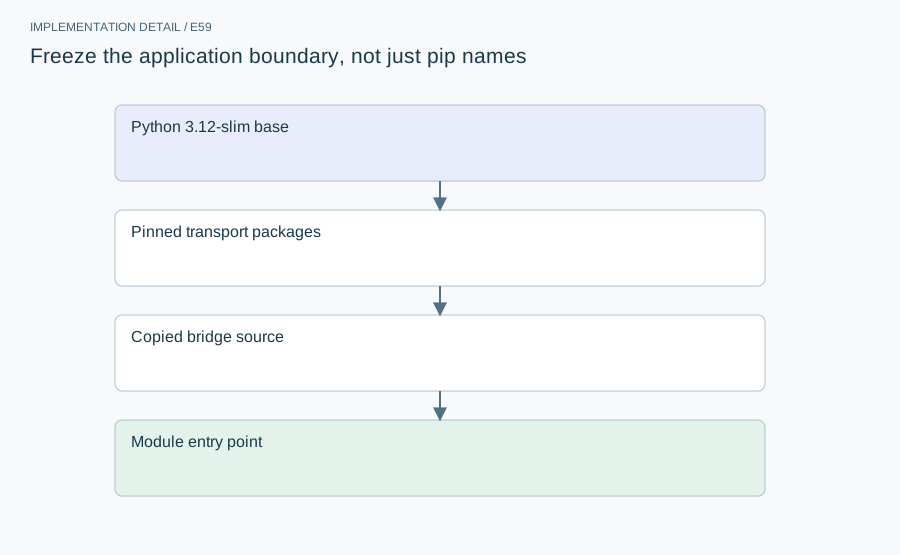
The container copies a narrow bridge module rather than the entire research workspace. This is a useful separation: a transport process should not require every notebook, dataset and training dependency to run. The module entry point defines the process boundary but does not establish live connectivity or production correctness.
The mathematical contract
Pinned top-level packages improve repeatability while leaving the base image and transitive resolution as additional sources of change. Model weights, feature schemas and endpoint configuration should be explicit external artifacts, not accidental files copied from a developer machine.
Implementation and resource card
- Capacity / budget
- Declared Python 3.12-slim, pyzmq 26.2.0 and msgpack 1.1.0. The base image tag is not pinned by digest.
- Execution evidence
- This revision inspects and explains the archived implementation. It does not rerun the original workload. No unrecorded convergence time, throughput or accelerator result is supplied.
- Current reproduction context
- Current workstation, supplied by the author: Apple M4, 128 GB unified RAM, 40 GPU cores and 16 CPU cores. This is context for prospective reproduction, not attribution of every archived run. Python and framework versions are not fully locked for these historical sources; declarations, when available, are identified separately.
From explanation to a reproducible check
Inspect the build context and image contents for unintended files, then test a local serialization round-trip without external endpoints. No container build, service deployment or broker connection is performed by this article.
Preserve input identities, configuration and failure records with the result. A successful numerical check only establishes the operation it exercises: it does not certify an entire dataset, model or deployed system. Reproduce the interface on a small deterministic input before optimizing throughput or increasing workload size.
A closer look at the implementation
The code that carries the idea
The excerpt pins pyzmq and msgpack versions, sets a working directory and uses an ENTRYPOINT of python -m. The runtime must supply the intended module name. The base tag is not a content digest, so the build is not fully immutable merely because the Python dependencies are pinned.
FROM docker.io/library/python:3.12-slim

RUN pip install --no-cache-dir pyzmq==26.2.0 msgpack==1.1.0

WORKDIR /app
COPY src/bridge/ /app/src/bridge/
RUN touch /app/src/__init__.py /app/src/bridge/__init__.py 2>/dev/null || true

# Neither entrypoint can place an order: there is no code here that could.
ENTRYPOINT ["python", "-m"]
Verbatim archive excerpt from Containerfile.bridge. Context-dependent historical code, not a standalone runnable program. Comments retain their original wording; the article distinguishes implemented behavior from stale or overbroad comments.
The boundary that matters
Excluding action code does not prove a complete security boundary. Runtime mounts, credentials, network access, user privileges and the bridge code itself still matter. No image was built, service launched or production configuration changed for this article.