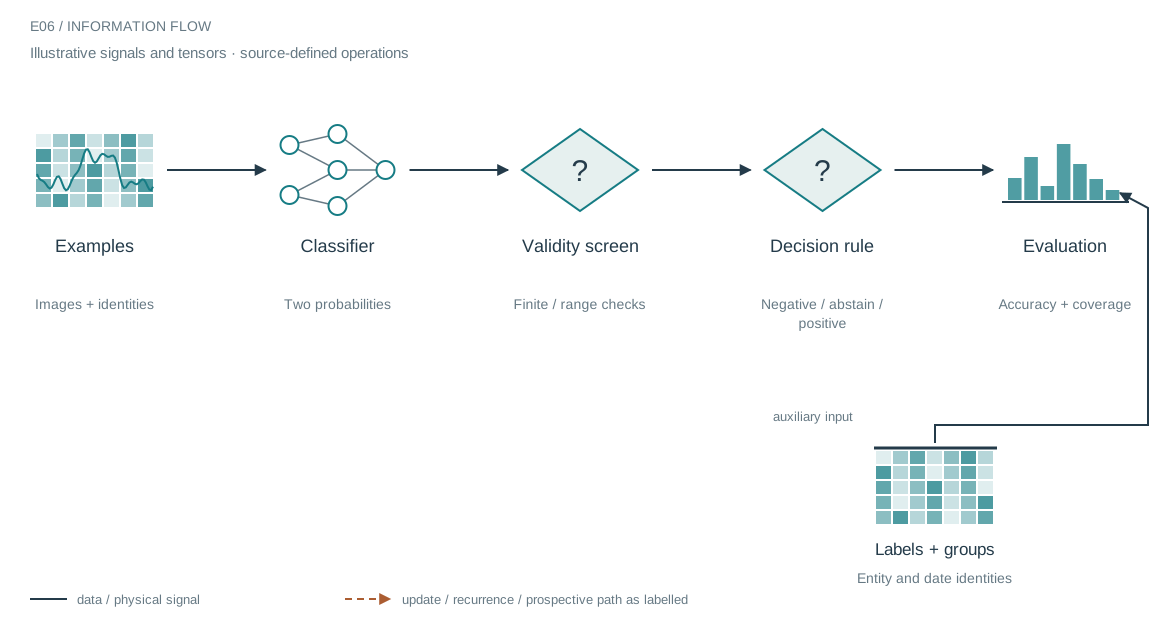
The architecture in context
What this comparison asks
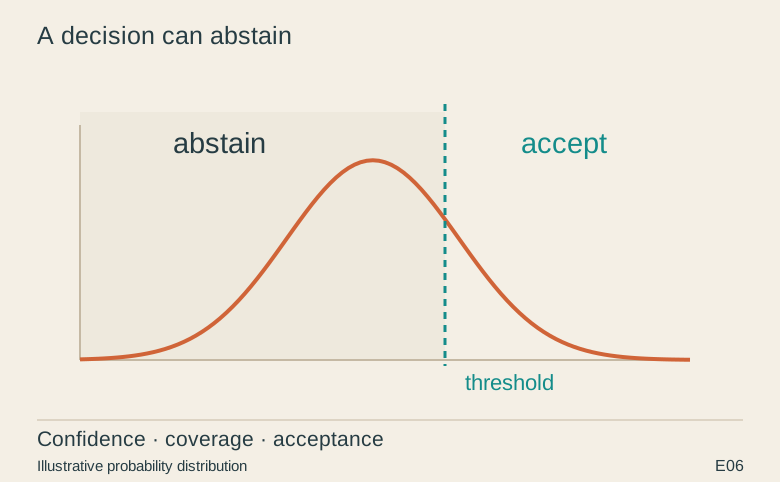
A classifier need not make a committed decision on every sample. The evaluation utility joins image paths, labels, identities and predicted probabilities, then applies lower and upper thresholds to the probability of class one. The interval between them is a deliberate abstention region. This adapter belongs after the model: the network estimates a score, while a separate rule decides how to use it.
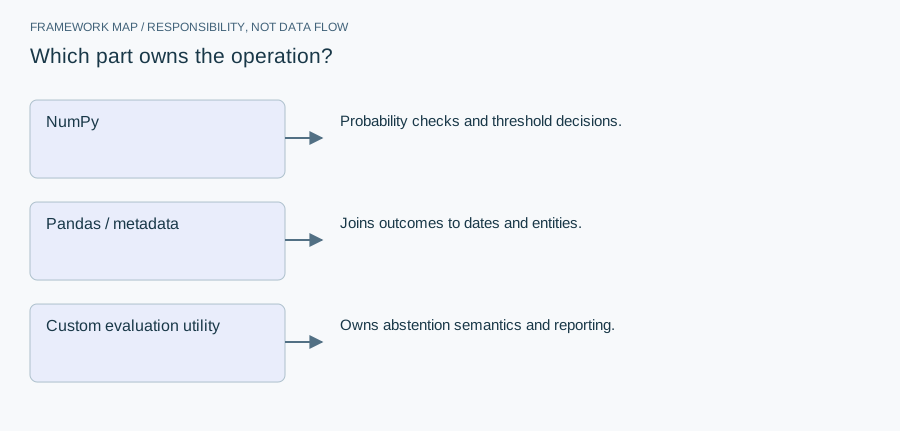
Who does what in the stack
- NumPy
- Probability checks and threshold decisions.
- Pandas / metadata
- Joins outcomes to dates and entities.
- Custom evaluation utility
- Owns abstention semantics and reporting.
The custom evaluator carries source metadata into grouped analysis and converts one-hot labels to class indices. That makes it possible to ask whether a threshold works consistently across dates or merely selects a favorable subset. It is an evaluation interface rather than an architecture change.
Open up the implementation
A classifier is not yet a decision rule
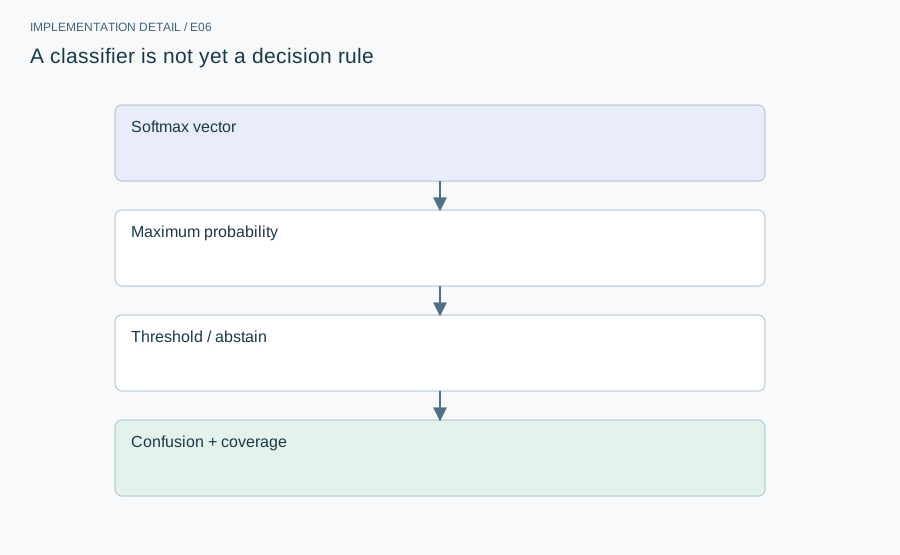
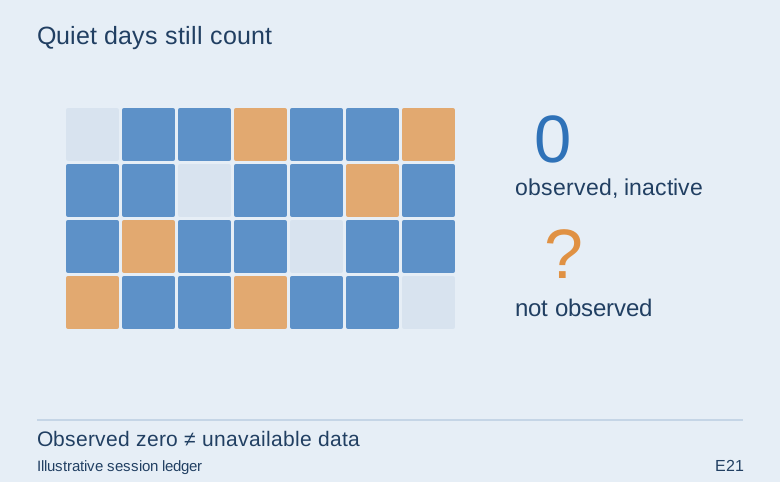
A prediction can be correct, wrong or not acted on. The evaluator turns a probability vector into a class and optionally abstains. Accuracy on accepted examples conditions on that selection. It must be paired with the eligible denominator and abstention rate. The class-range filter in the source can remove records before scoring, so the denominator needs to be reconciled with the original prediction batch.
The mathematical contract
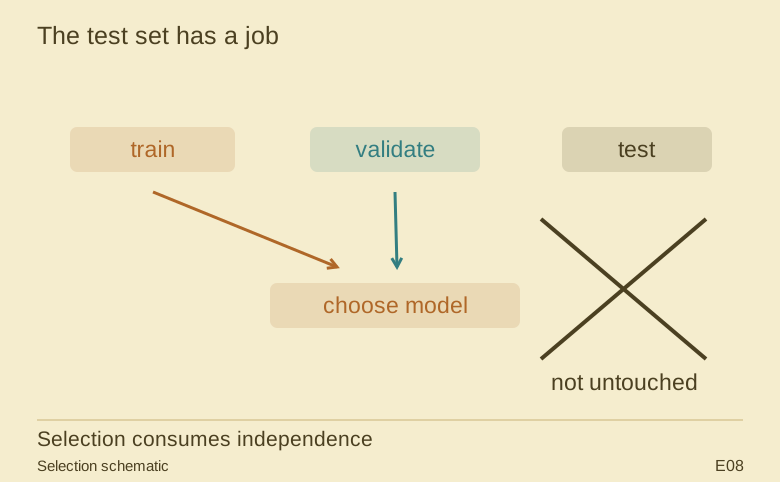
A higher threshold can raise conditional precision while rejecting most useful opportunities. Probability calibration and decision utility are separate from classification accuracy. Choose threshold and class mapping on a development partition, then carry them unchanged into evaluation; otherwise the reported operating point is another fitted model.
Implementation and resource card
- Capacity / budget
- No additional neural parameters or training epochs. The threshold is a decision parameter; threshold selection consumes validation evidence.
- Execution evidence
- This revision inspects and explains the archived implementation. It does not rerun the original workload. No unrecorded convergence time, throughput or accelerator result is supplied.
- Current reproduction context
- Current workstation, supplied by the author: Apple M4, 128 GB unified RAM, 40 GPU cores and 16 CPU cores. This is context for prospective reproduction, not attribution of every archived run. Python and framework versions are not fully locked for these historical sources; declarations, when available, are identified separately.
From explanation to a reproducible check
Use a three-row probability matrix containing a confident correct prediction, a confident error and a low-confidence case. Compute all counts by hand. Add an invalid class and require an explicit rejected-record count rather than silently improving the confusion matrix.
Preserve input identities, configuration and failure records with the result. A successful numerical check only establishes the operation it exercises: it does not certify an entire dataset, model or deployed system. Reproduce the interface on a small deterministic input before optimizing throughput or increasing workload size.
A closer look at the implementation
The code that carries the idea
The excerpt converts predictions to float32, filters rows whose probabilities lie outside [0,1], and extracts class-one probabilities. This makes malformed predictions visible in code, but removing them changes the evaluated population. Range checks alone also do not establish that class probabilities sum to one.
        # Check predictions for validity (in range [0, 1])
        valid_mask = np.all((predictions >= 0) & (predictions <= 1), axis=1)
        valid_predictions = predictions[valid_mask]
        valid_labels = labels[valid_mask]
        valid_tickers = np.array(tickers)[valid_mask]
        valid_dates = np.array(dates)[valid_mask]

        # Extract probabilities for class 1
        valid_probabilities = valid_predictions[:, 1]

        # Determine predicted classes based on thresholds
        if lower_threshold is None and upper_threshold is None:
            # No thresholds, use argmax to determine classes
            predicted_classes = np.argmax(valid_predictions, axis=1)
        else:
            # Apply thresholds to get predicted classes
            predicted_classes = pd.cut(valid_probabilities,
                                    bins=[-float('inf'), lower_threshold, upper_threshold, float('inf')],
                                    labels=[0, 'unclassified', 1]).astype(str)

        # Create a DataFrame
Verbatim archive excerpt from cnn_eval.py. Context-dependent historical code, not a standalone runnable program. Comments retain their original wording; the article distinguishes implemented behavior from stale or overbroad comments.
The boundary that matters
Accuracy among accepted predictions can rise while useful coverage collapses. Invalid, abstained and scored rows need separate counts against the same original sample total. This historical classifier analysis is not an execution-qualified strategy or a profitability claim.