The architecture in context
The system we are building
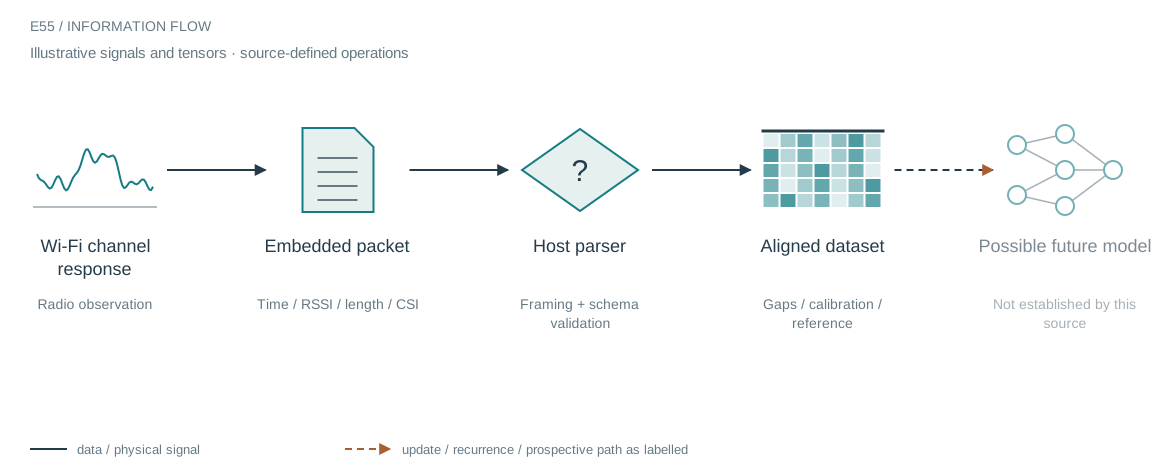
The selected project-status document describes a broader sensing direction involving radio measurements and possible additional modalities. The reusable engineering lesson is to establish an observation contract before claiming what can be inferred from the signal. The companion firmware supplies a concrete packet layout that can be audited independently of any ML model.
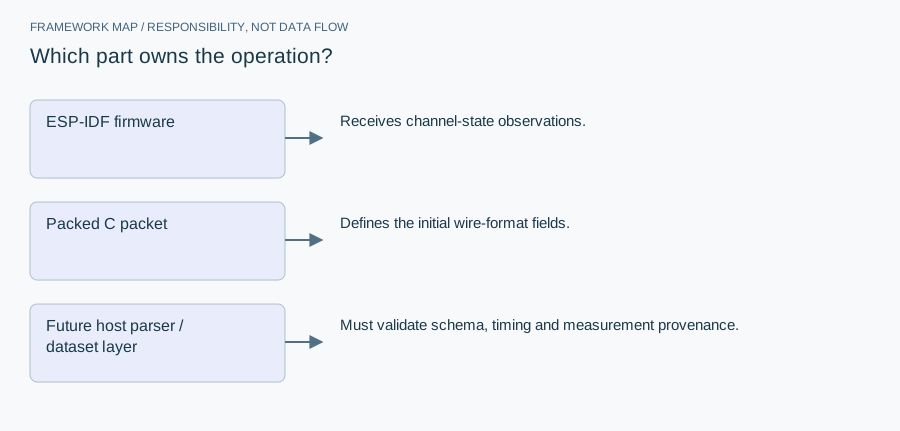
Who does what in the stack
- ESP-IDF firmware
- Receives channel-state observations.
- Packed C packet
- Defines the initial wire-format fields.
- Future host parser / dataset layer
- Must validate schema, timing and measurement provenance.
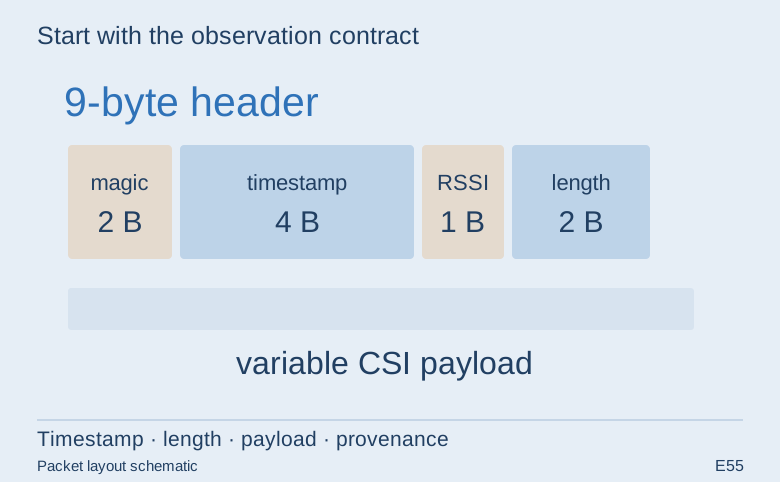
The packed header records a magic value, a timestamp, received signal strength and CSI payload length. Those fields make a parser possible, but do not by themselves define calibration, byte order, clock synchronization or the meaning of each payload element. The host and firmware must agree on all of them.
Open up the implementation
A hardware plan needs a packet contract
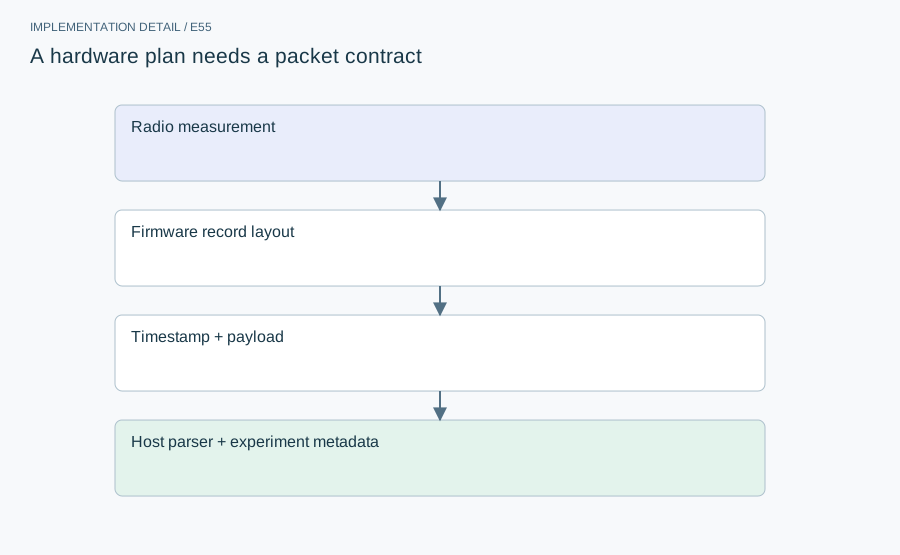
A sensor project becomes reproducible when its digital observations have a stable, checked format. The companion firmware gives a concrete interface: magic marker, timestamp, signal-strength field, length and variable payload. Those bytes establish what reaches a future algorithm, not what physical quantity can be inferred from it.
The mathematical contract
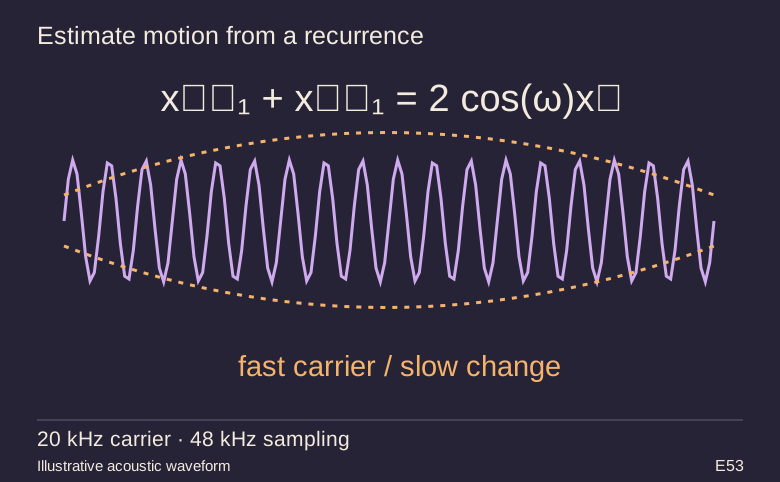
Timestamp resolution, rollover and dropped records can dominate downstream temporal modeling. A rich neural model cannot reconstruct missing phase or calibration merely because the packet parser succeeds. Observation semantics must precede model design.
Implementation and resource card
- Capacity / budget
- Planning/status entry; no trained network or demonstrated molecular-sensing performance.
- Execution evidence
- This revision inspects and explains the archived implementation. It does not rerun the original workload. No unrecorded convergence time, throughput or accelerator result is supplied.
- Current reproduction context
- Current workstation, supplied by the author: Apple M4, 128 GB unified RAM, 40 GPU cores and 16 CPU cores. This is context for prospective reproduction, not attribution of every archived run. Python and framework versions are not fully locked for these historical sources; declarations, when available, are identified separately.
From explanation to a reproducible check
Decode a synthetic packet with known fields and reject malformed lengths before allocating or copying payload. Track firmware version and clock interpretation in the capture metadata; do not present a project roadmap as measured sensing capability.
Preserve input identities, configuration and failure records with the result. A successful numerical check only establishes the operation it exercises: it does not certify an entire dataset, model or deployed system. Reproduce the interface on a small deterministic input before optimizing throughput or increasing workload size.
A closer look at the implementation
The code that carries the idea
The excerpt is a C struct with a flexible payload array. Packed layout removes ordinary compiler padding, making serialization more predictable, but explicit protocol versioning and endian conventions are still needed for a durable dataset format.
// Binary Packet Structure
typedef struct {
    uint16_t magic;
    uint32_t timestamp;
    int8_t rssi;
    uint16_t csi_len;
    uint8_t payload[];
} __attribute__((packed)) csi_packet_t;
Verbatim archive excerpt from main.c (companion source E56). Context-dependent historical code, not a standalone runnable program. Comments retain their original wording; the article distinguishes implemented behavior from stale or overbroad comments.
The boundary that matters
The roadmap does not establish molecular sensing, validated physiological inference or completed optical/radio fusion. A signal’s sensitivity to movement does not make a target quantity identifiable. This article deliberately labels the future model as a future stage.