The architecture in context
The system we are building
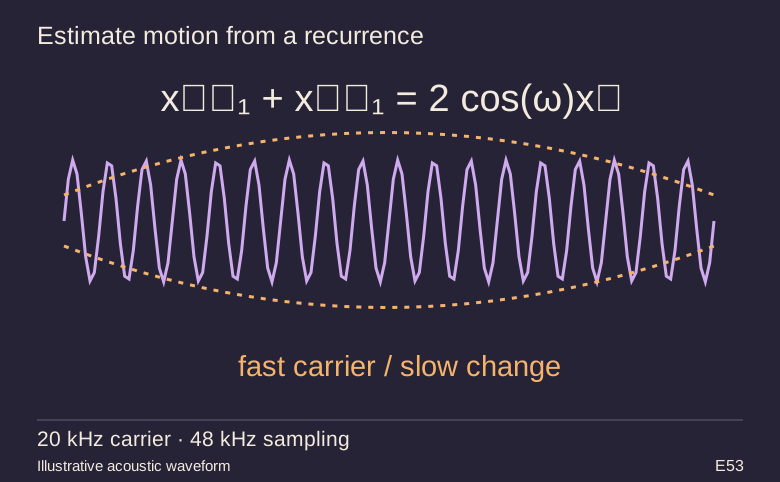
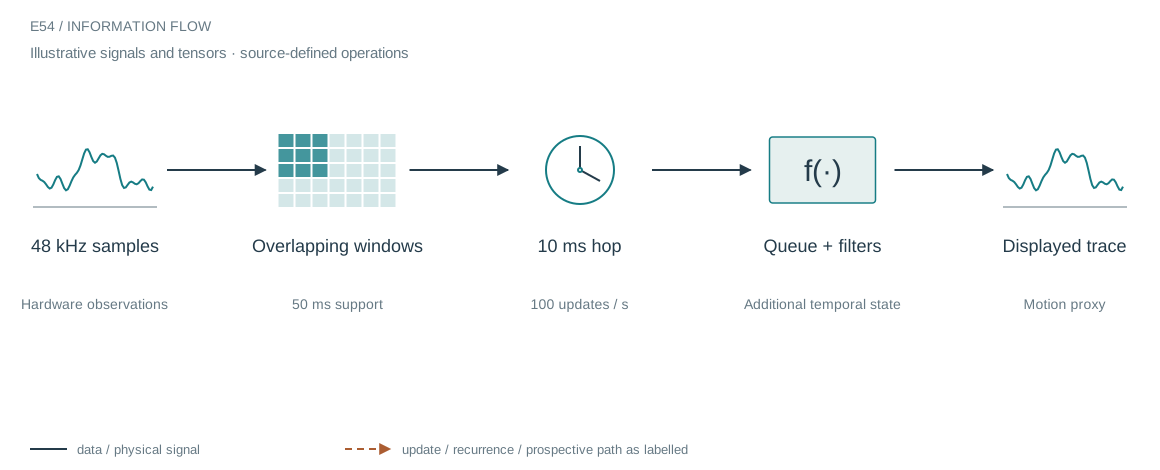
The archived acoustic report motivates an ambitious noncontact measurement application. The engineering question is narrower: how quickly can the pipeline produce a useful, calibrated estimate from a given window of data? Sampling frequency, display refresh and estimation latency are different quantities.
Who does what in the stack
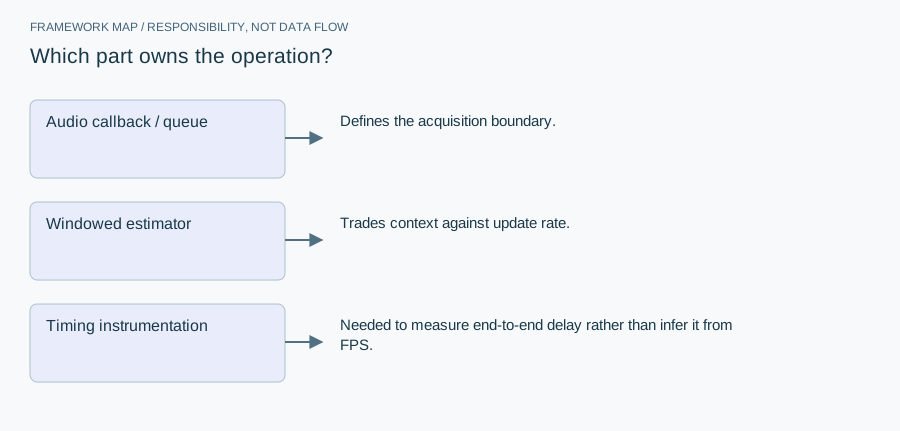
- Audio callback / queue
- Defines the acquisition boundary.
- Windowed estimator
- Trades context against update rate.
- Timing instrumentation
- Needed to measure end-to-end delay rather than infer it from FPS.
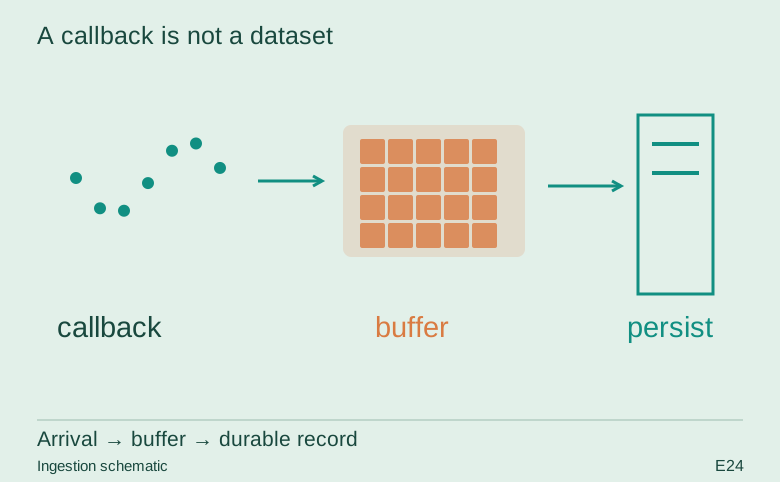
The companion callback code copies input into a queue while writing the carrier. The main loop supplies estimation and filtering. This is a sensible starting architecture, but it needs bounded buffering, timestamps and quality flags before a display rate can be interpreted as a real-time sensing guarantee.
Open up the implementation
An update rate is not physiological validity
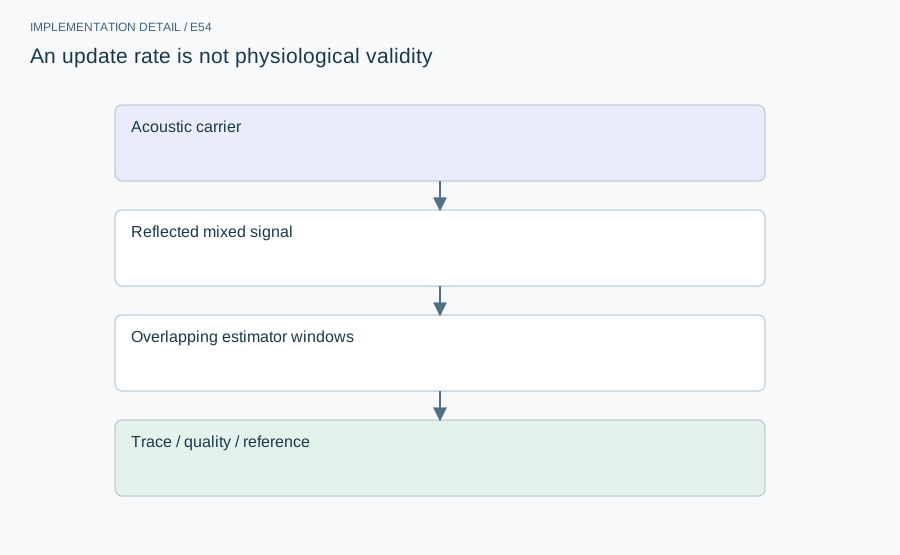
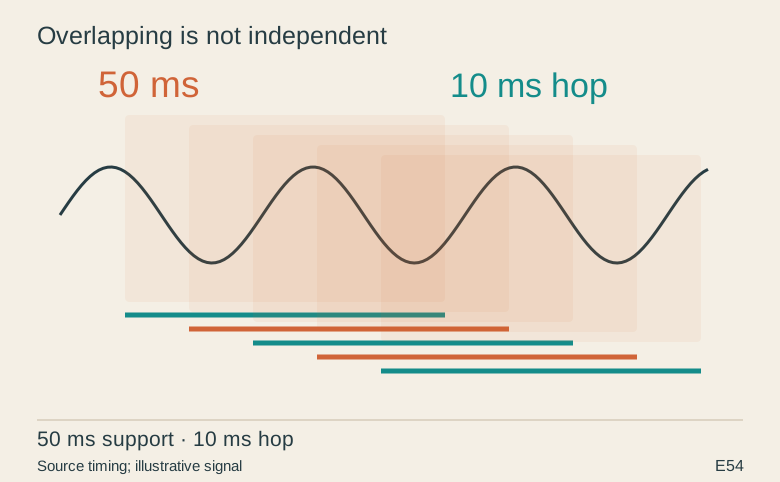
A100 Hz display update can look responsive while each estimate still depends on a 50 ms window and on callback/queue latency. Relating frequency variation to breathing adds motion geometry, multipath, microphone and loudspeaker behavior, and an independent physiological reference. None follows from the recurrence alone.
The mathematical contract
A convincing sensor model needs a measurement chain and uncertainty analysis, not a decorative person illustration. The technical diagram therefore shows waveform acquisition, estimator support and validation boundary. Person-specific claims require synchronized reference measurements and failure cases.
Implementation and resource card
- Capacity / budget
- Shares E53’s 48 kHz/20 kHz/50 ms/10 ms signal path. The report is not a clinical performance dataset.
- Execution evidence
- This revision inspects and explains the archived implementation. It does not rerun the original workload. No unrecorded convergence time, throughput or accelerator result is supplied.
- Current reproduction context
- Current workstation, supplied by the author: Apple M4, 128 GB unified RAM, 40 GPU cores and 16 CPU cores. This is context for prospective reproduction, not attribution of every archived run. Python and framework versions are not fully locked for these historical sources; declarations, when available, are identified separately.
From explanation to a reproducible check
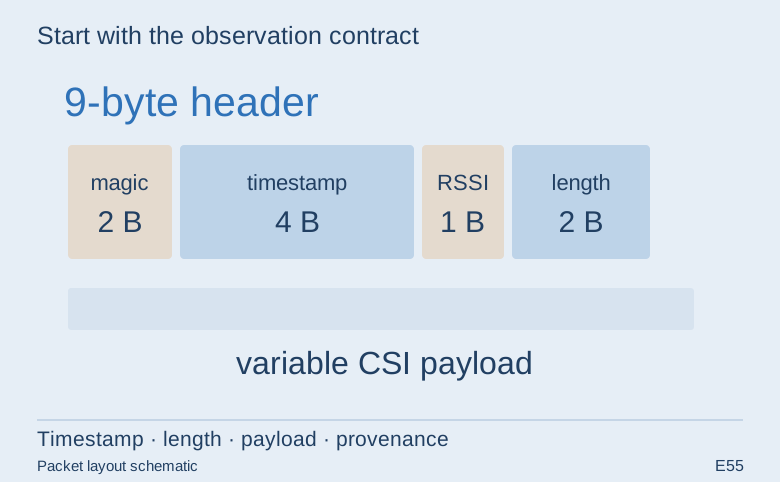
Measure callback-to-output latency with timestamps rather than frame rate. Validate on a synthetic acoustic signal first. Keep a proposed human-reference study separate from this archived prototype and avoid diagnostic claims.
Preserve input identities, configuration and failure records with the result. A successful numerical check only establishes the operation it exercises: it does not certify an entire dataset, model or deployed system. Reproduce the interface on a small deterministic input before optimizing throughput or increasing workload size.
A closer look at the implementation
The code that carries the idea
The three-line callback is deliberately small. It does not estimate respiration, guarantee bounded queue delay or synchronize a reference sensor. Overlapping 50 ms windows updated every 10 ms share most of their samples, so their errors are correlated.
def audio_callback(indata, outdata, frames, time, status):
    outdata[:] = pilot_tone.reshape(-1, 1)
    input_queue.put(indata.copy())
Verbatim archive excerpt from ghost_v2.py (companion source E53). Context-dependent historical code, not a standalone runnable program. Comments retain their original wording; the article distinguishes implemented behavior from stale or overbroad comments.
The boundary that matters
The historical report’s stronger physiological and time–frequency claims are not adopted here. A parametric single-tone estimator can exploit assumptions that a generic spectrum does not; it does not abolish uncertainty or establish medical performance. No microphone or speaker was activated for this article.